
The BBC and OU have joined together to do a performance this Sunday.
Good site for exploring one of Shakey's rivals - and sources.
This should be available on line!
Click on the title above or on this:
http://www.open2.net/drfaustus/
Enjoy!!!!!
 timisoara


I'm just coming out of a week of workshop and performance with a mixed group of enthusiastic amateurs and (what I like to refer to as) proto-professionals.
What started off as a performance of a cut down Shakespeare, ended as a most interesting experiment in the application of 'ambience' and 'accident' to a variety of text extracts. The basis remained Shakespeare - as reflected in the 'All the World's a Stage' speech which both started and ended the performance.
On Friday evening, as the sun set, we promenaded the texts in front of an invited audience - in the local botanical garden, a public place which hadn't been closed to 'the public'. Most definitely intended as (as one participant phrased it) a work in progress, resonance and echo, bright bombs of ideas and dud squibs have been infecting my waking thoughts since.
The strongest image I come up with is that of Seurat's, 'La Grande Jatte'.
In that remarkable work, individuals, pairs and small groups are placed in a man adapted landscape: So too with our texts.
Monologue, dialogue and more extended extracts from scenes were placed in a landscape which evolved out of the mixture of human decision and selection, and the more powerful vagaries of natural growth working on a genetic ‘text’.
This is a rational/real-isation ‘After the fact’, but so much of what happens in theatre is precisely thus - no excuse needed.
Environment and text interacted far more powerfully than I anticipated (or hoped for). Indeed, I am not sure I was consciously aware of the potential when I started on the workshops.
What the gardens were originally chosen for – backdrop and oddness, colour and outdoorness, time and light - soon transformed the scenes.
The strongest effect, in performance, was to unify. Under the green wood, along the paths, confined in the fenced space; but much stronger in feeling was the awareness of people – the park was full of humans – like La Grande Jatte on a Sunday morning.
These people were sitting, talking, walking, playing guitar, watching the children – and the ‘actors’ were no different – they too were in the playground, a natural part of the park: Truly, all the world had become the stage.
Each text was given a relevance – and the extracts became caught moments of other people’s conversations.
Caesar was just walking along the footpath amongst a group of friends and between the park people when from another path, across the formality of a flowered bed, the soothsayer shouted her warning – a moment only, then passed on – not time to catch more than an awareness of other people’s lives.
Later, on a zigzag Chinese bridge, over a dry pond, Oberon has just parted from Titania – and calls for Puck to fetch the magic flower – a dog barks as he mentions the singing of the mermaid, children are noisily playing, a family, pushing a child in a buggy stop and watch, then move on – a man with his children had watched the actors ‘rehearsing’ a previous scene – time looped.
 Not often I have the chance - but a couple of weeks ago I did my best to drag some willing Romanians into Shakey's world.
| Quote: |
| I have read in the ancient writings of the Arabians that Abdala the Saracen on being asked what, on this stage, so to say, of the world, seemed to him most evocative of wonder, replied that there was nothing to be seen more marvellous than man. (An alternative translation renders the phrase, ‘on this stage, so to say, of the world,’ as ‘in this theatre of the world.’) |
| Quote: |
| What is our life? A play of passion Our Mirth the music of division; Our mother’s wombs the tiring houses be, Where we are dressed for this short comedy; (Sir Walter Ralegh) |
| Quote: |
| Antonio: I hold the world but as the world … a stage where every man must play his part, and mine a sad one. Macbeth: Life’s but a walking shadow; a poor player, that struts and frets his hour upon the stage . . . |
| Quote: |
| Heaven the judicious sharp spectator is, That sits and marks who doth act amiss; |
Not that I normally turn to the characters of a novel for insights into the characters of Shakespeare's plays, but . . .
Seeing as Sir Salmon (whoops - Sir loin all over again - make that Salman) has just been 'Sired', I dug out of the local British library a copy of 'Fury' - one of the more recent novels of a novelist I enjoyed reading when I lived in countries you could get hold of his books.
There, in the very first chapter, you have a 'doctoral thesis' on the importance of the inexplicable in Shakespeare - and as one character strokes the others finely wrought breast . . .
“. . . at the heart of each of the great tragedies were unanswerable questions about love . . .”
“Why did Hamlet, loving his father . . . delay his revenge while, loved by Ophelia, he destroyed her instead?”
'”and why was Macbeth, a man's man (sic) who loved his king and country, so easily led by the erotic but loveless Lady M. . . .?”
And now the really interesting one!
Othello lacked 'emotional intelligence'. “Othello's incredible stupidity about love, the moronic scale of the jealousy which leads him to murder” was because “Othello doesn't love Desdemona” - the books italics.
‘What?’ a thousand love-lorn loons honk!
But be patient – one thing experience has taught me is that quality writers putting such odd statements into the mouths of their characters usually have something hidden up their sleeves. Rushdie is no exception – he goes on:
He says he loves her “. . . but it can’t be true. Because if he loved her, the murder makes no sense. For me, Desdemona is Othello’s trophy wife, his most valuable and status-giving possession, the physical proof of his rise in a white man’s world.”
Ugh?
So, Othello is just a ‘Material Man’! Makes some sort of sense to me – especially at this end of the capitalist revolution, dot booms and bubbles all over the place (not to mention gold wearing Russian oligarchs, and the less wealthy, but no less ostentatious Romanian BMW-ers).
The ‘Black-eyed Peas’ song and video – ‘My Lumps’ - pops up at this point too. Although I never trust that lot to not be doing a deconstruction on the world – far too intelligent for their own good.
Rushdie’s character hasn’t finished there though:
Othello, as a Moor, is of the Islamic moral universe – “whose polarities are honour and shame. Desdemona’s death is an ‘honour killing’. She didn’t have to be guilty. The accusation was enough. The attack on her virtue was incompatible with Othello’s honour.”
And a nagging suspicion that this is a ‘true reading’ for the contemporary world creeps in – gone are the Romantics at last – get real.
And houses of cards come crashing down.
Could Rushdie have opened up a new, rich vein worth pursuing – an Islamic Othello? Forget all the Christian focused culture clash papers – turn it on its head – Othello is a modern Muslim.
Honour killings are not just taking place in the streets of
I’ll leave you with some more thoughts on Shakespeare, our contemporary’s, character – thoughts I find deeply disturbing but so potent, reflective of much of the so-called love relationships of the modern world:
“She’s not even a person to him. He has reified her. She’s his Oscar-Barbie statuette. His doll.”
All quotes from Salman Rushdie, Fury, chap 1, Vintage 2002.

Not everything you think, is true.
Does Makbeth meet fairies or witches?
In a previous post I explored Shakspear and the connection with King James and his little work on Witchcraft.
Now I have the picture of Makbeth's first meeting with the 'witches'. It is from the ‘source’ Shakey would have used for the main elements of the plot – Holinshed’s Chronicles (need to check that – that is what it said on the Internet site I borrowed the picture from).
Now, I don't know about you, but the rather refined looking ladies greeting the Elizabethan 'gents' in the picture above don't quite fit my 'vision' of Macbeth and Banquo's 'black and midnight hags'.
What worries me is that the woodcut might be much closer to Shakspear’s image, and possibly the original production’s costuming, than I would like.
Part of the problem is that I am not sure how to read the picture – there is an iconography here which I am not a party to.
The gent closest to us – Makbeth I’d guess by the way the witches are looking to him – has no armour on – or rather has one symbolic piece, the helmet (possibly a breastplate – but it looks more doublet to me). If he is the victorious body splitting general of Shakspear, he’s had a jolly good wash and got the grooms to work on his horse too. Is the helmet enough to tell the Elizabethan reader this is a military hero? If it is, would it be enough for the Globe’s groundlings?
I notice behind his head is a castle – with some active birds – must be Macbeth’s castle – although they don’t look like Martins to me, more like crows: Does suggest Shakspear looked closely at the picture though.
More crows flying around the ‘castle’ on the top of the head of one of the ‘witches’ too – although these could be clouds. Is that Elizabethan headgear? Maybe not – old fashioned hat? And this one is pretty ugly – broken nose by the looks of it.
Wouldn’t say the others were ugly though – and they don’t look particularly old either – quite smart, upright, well shaped.
I am reminded of Alice Nutter.
For those of you not familiar with the local history of the Pendle area of
The clothing on the witches is interesting – looks exotic – the woodcut cutter has taken pains over the patterns on the material – each different, each looking expensive, possibly silk or damask? This would make them stand out to the Elizabethans.
So, ‘from the farthest steep of
Shakspear gives them beards – there is the slightest suggestion of such in the picture, from the attempt to create shadows. He has us meet them in weather very unlike that of the woodcut – which is quite pleasant. Certainly he takes us further – but how far would he have gone in production?
Nowhere near the broomstick riding cacklers of popular imagination I’d guess.
The Play's the Thing!
(A nu-Author-ised Version)
The crowd’s quickly filing in through the doors and filling the courtyard of the Globe. A few dark clouds have loomed over since Hercules ran up the flagpole but the wiser, or at least more experienced, Groundlings know they're empty of threat.
A couple of young gents have tried muscling their way on to the stage - it's a new play and a great opportunity for the 'Gulls' to show off their feathers - but they must be new in town: The Globe doesn't allow that sort of thing. They're skulking off to one of the higher levels, faces reddening at the jeers of the apprentice boys.
The usual ladies are plying their trade - they'll need to be quick, the building is almost full and there’re signs of movement in the musicians’ box.
The noise inside is quite deafening, shouts of friends across the floor, apprentices greeting masters and their wives in the galleries running around, a few of the finer folk even higher. It's the new play by Shakspear, one of the actors - something about Hamlet. Several of the audience remember an old play, some even saw it across the river, but it didn't stick in their memories.
Most are expecting plenty of blood - the latest fashion, a good bit of revenge and a few jokes: All know they'll be plenty to talk about after - one of the delights of the new Globe is the arguments in the bars of the stews that take place regularly after one of Shakshaft's concoctions. Several of the crowd are just content to gaze around, mouths open, like dead codfish, stunned by the splendours of the new theatre.
The trumpets blast out and the apprentices cheer. A mix of hissing and hushing is followed by a drum role; the back curtain is thrown open, a couple of ordinance fire and a great loud march sets in.
Straight away the audience understands we’re in a court – some proud king is about to make his entrance, and four stage hands are carrying in the state – so, its official business, big declarations and lots of boasting expected.
In they come. A couple of lackeys in royal livery representing the hundreds of servants who could never fit on the stage, a priest or two, several courtiers – one of whom is an old man, (surely that’s the actor who was playing Caesar last Tuesday?) - there’s Shakspear at the back pretending to be a soldier – and in progresses the King with one of the older boys by his side as the Queen (Time they let him grow a beard and get out of that costume – it fitted him well when he did Titania a couple of year’s ago).
Where’s Burbadge?
Up in the balcony – dressed in black – several of the crowd took him for one of the Gulls who’d managed to sneak in – posing in black – quite a popular colour these days – but the regulation hat’s missing.
Is he a lover, or a puritan? Why’s he up there and not down on stage with the court? Amazing workmanship on that black doublet – rich whoever he is.
Cheers on the stage, echoed by the more roisterous in the crowd, as the King sits in his throne and the Queen takes a chair by his side.
One of the Groundlings bellows, just as he’s about to speak, “Watch out, there’s a black crow above your head!”
This gets a good laugh and gives Burbadge the chance to nod his acknowledgements to the adoring Globe. Great applause and stamping of feet, from some; hisses and shushes from others only stopped by a repeated trumpet clarion – the King rises and attention once again is drawn to the court.
Very few notice the thought behind the eyes of the soldier at the back – but there’ll be changes to the opening of the next performance, if the rest of the play goes well.

Actually, I am not surprised.
Antonio is such an anodyne wimp and Shylock such a dynamic powerhouse that any focus on the former at the expense of the later is bound to seem wasted: The same is true of Milton’s Satan – now there’s a scene stealer is ever there was one – poor old god left right out in the celestial cold.
And then there is the circular argument – Elizabethan England was anti-Semitic – we all know that – after all, Shylock’s portrayal is one of the main pieces of evidence isn’t it?
Strange then how many of the great Shylock performances of recent times crack the cliché and reveal not a ‘stereotype Jew’ but a very human, if flawed, character.
But there – you see – hoisted by my own petard - off the subject of Antonio and onto Shylock!
The play starts with Antonio walking on (as though through the streets of
Friend: Why are you so miserable? This sadness is very boring!
Antonio: In sooth, I know not why I am so sad.
Cue Romeo (Aye me . . .); Cue Hamlet. Oh the moans, the moans!
Any but the most drunken groundling jumps straight to the point – Melancholy: Quite a fashionable disease at the time – every self-respecting artist, musician or unemployed scholar (not to mention teenage lover) donned the black hat and sighed bad breath over his friends (sorry ladies, women had to go for the hysterics).
Antonio is striking a note of dissonance right from his first “oooooo th” – and there are more to come.
He continues:
It wearies me; you say it wearies you;
Get the feeling he couldn’t give a monkey’s?
But how I caught it, found it, or came by it,
What stuff ‘tis made of, whereof it is born,
I am to learn;
And that’s a half line – cue for a big pause.
Plenty of time for the audience to answer his questions – black bile. Too much earthy heaviness – several potential causes: Several types – so, what’s unbalanced this guy: Unbalanced? Yep – he is suffering from an excess of bile, he is out of harmony with not only the world, but his maker.
And then he jumps in with,
And such a want-wit sadness makes of me
That I have much ado to know myself.
So Antonio has nailed his flag to the mast.
But hold on – Much Ado? Not about nothing surely? And, ‘want-wit’? And, not to know myself?
Either he is serious – as this bunch of friends think; or he is posing – as Gratiano suggests later in the scene.
An interrogation follows – following good Elizabethan medical theory.
As a melancholic, Antonio is under the influence of Saturn – he will exhibit sadness, contrariness and deliberation; earth is the dominant element with the attributes of cold, dry, black sourness. A quick look at Durer’s ‘Melancholia 1’ reveals the ‘gifts’ of Saturn – numbering, measuring counting (land and money) – all low, earthly occupations.
Salerio assumes this is where the source of the Antonio’s trouble lies – excessive worry over his material possessions. Solanio backs him up (both giving essential plot details). Salerio returns with more – jointly giving a total of over 30 lines on the worries of being a merchant. How many in that first
Antonio denies the diagnosis – incidentally confirming his melancholic ‘strengths’ of counting, numbering and deliberation. But am I talking about the merchant or the moneylender? It certainly seems to me as though they are two sides of the same coin.
Solanio makes his second, wild guess – love!
Quickly, and contemptuously, dismissed (although many modern productions choose to ignore this dismissal and try to hang Antonio’s character on a secret homosexual love – I suppose it gives the modern method actor something to worry away at, even though it has nothing to do with what Shakespeare intended).
Solanio seems to give in at this point – you have inherited the sadness from nature – but he does bring up ‘two-headed Janus’ – which again suggests, to me, Shylock and Antonio as aspects of a single unity.
We have not got to a solution when Bassanio, Lorenzio and Gratiano enter – and instantly Solanio bids goodbye:
Fare ye well;
We leave you now with better company.
If Solanio has made the Melancholic diagnosis, then the cure includes companionship, unburdening of the heart, and peace of mind (and music and drama) – all designed to ‘lighten’ the humours and restore balance. He and Salerio are not doing too well – although they are trying – they have business to go to, and that is the last thing Antonio needs to be thinking about – so, a quick exit is called for.
Antonio, sourly, thanks them for their company and doesn’t fail to point out that they are ‘embracing the occasion’ to depart.
This is true – but what is the motive?
Well, that’s a very 20th Century question – Shakespeare, having set the scene of a Melancholic ‘Title’ character, now needs to move the plot on a bit – and introduce a second theme, friendship.
Bassanio is Antonio’s friend – Solanio and Salerio, like Romeo’s mother and father, withdraw to let friends talk and, hopefully, ‘unburden’.
But before that can happen, there is a last stab at the diagnosis – this time from a straight talking Gratiano.
He assumes ‘care’ about earthly things is the cause – and points out how greatly changed Antonio is.
This is one of those important indicators that slip through – how does Gratiano know? What is Antonio doing that is ‘changed’? Surely, like Hamlet, we have visual as well as reported indicators. Antonio must be in black – reduced in finery? Hence the constant assumption ‘material wealth’ is at the bottom of the Melancholy.
Antonio now comes out with the much quoted:
A stage, where every man must play a part,
And mine a sad one.
This, of course, is the ‘All the World’s a Stage’ thought – it is, additionally, the ‘How weary, stale, flat and unprofitable; Seems to me all the uses of this world’ of Hamlet.
It is also a half line ending – and Gratiano, not taking this ‘feigned’ nonsense, leaps straight in, playing the fool.
Standard medical treatments are recommended – and an interesting accusation – some men wilfully take on the mantle of Melancholy in order to seem wise – and Antonio doesn’t actually deny this, but says he will talk more.
What are we to make of Antonio’s Melancholy?
Well, the first important point is that Antonio cannot be seen as an example of Christian virtue, in harmony with his maker.
Melancholy, whether feigned or real was an indication of dispair – one of the greater sins to your average Elizabethan – it represented a refusal to enter into a relationship with god.
Next there is the question of the type of Melancholy – and we have dismissed the major contenders – concern for business and love – which leaves us with two further possibilities, ‘The Intellectual’ (indicated by Gratiano) or one not mentioned – The Malcontent.
It was the Malcontent who, finding no place in the social system, joined the extreme religious sects – such as the Puritans or, in Elizabethan England, the Catholics.
And Angelo is most likely in black – just as Malvolio.
Antonio to the groundlings of The Globe, would be seen as a potential figure of fun – and a joke will be played on him which is as cruel as that played on Malvolio. Black humour certainly, arising from the black humor of bile.
But knowledge of this also prepares the audience to expect from Antonio statements of an extreme nature:
- Timothy Bright, A Treatise of Melancholie, (1586), Facsimile Text Society, New York, 1940. p.102.
Taken in this light, the strong anti-jewish sentiments expressed by Antonio cannot be seen as inherent anti-Semitism either in the play or in the playwright.

The play of departures!
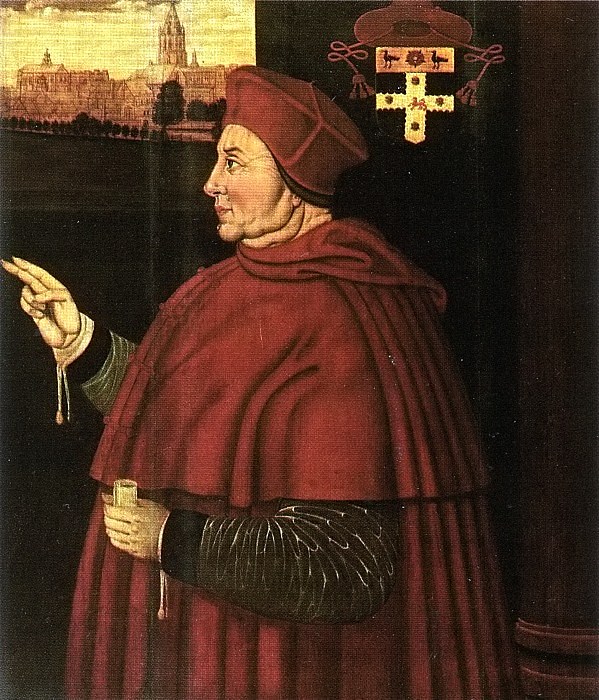
Just finished the second half of the BBC Henry the Eighth: Jolly good too!
What struck me most was the number of departures - and no one given a bad end.
Written well after the events - in a Protestant country - out of the Tudor reign; and no blame to be seen.
Wolsey dies an honest Christian; Catholic Catherine dies a saint's death; Cranmer - to die at the stake under Catherine's daughter's yoke - is deeply holy and prophesies, at the christening of baby Elizabeth, nothing but glory - and virginity and death.
What was Shakey thinking?
Surely it was written for a court performance under James? It is a chamber piece - so much 'internal' - so protagonist free.
What vice there is, is that of ambition and court pettiness. There is no evil here.
It is the fall of angels. Foreshadows of
And what a production – as close to where it should be as the Beeb could get – genuine Tudor locations (so right for this chamber piece).
But still something missing?
Maybe the theatrical.
How intriguing that the original Globe burnt down during a performance of this play – the theatre itself rebelling at so strange a play?
What a reputation the man has!
(Not Shakespeare this time - Good old 'King Henry'.)
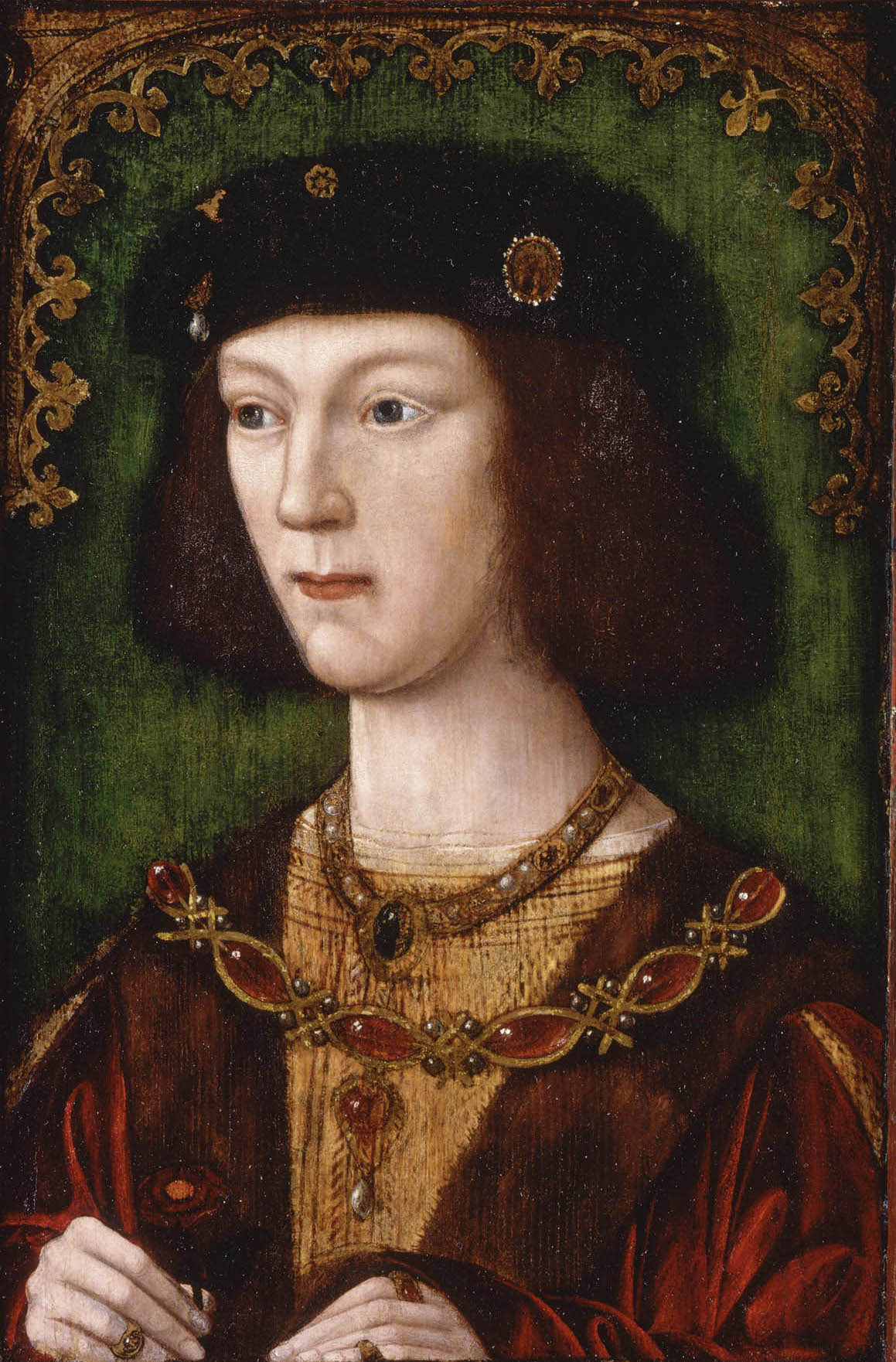
Tudor playboy, musician, sportsman, passionate lover, wife killer, church destroyer, (and saviour) in one.
American WASPs are 'P' because of he.
And Shakespeare has a play with the title, 'Henry VIII'.
Well, it is also known as ‘The Famous History if King Henry the Eight’ but that’s far too long for the playbill and we already know the man is famous.
Not so the play.
I’ve just watched the first half of it in fact – from the BBC complete works.
Surprising really – intelligent matter. You don’t notice that when you read it – and I have only a vague remembrance of watching this performance back in 1979 so I only know it through a dutiful, once only, read.
You expect a different treatment of the characters – and much more vitriol against the Spanish (so far it is the French who have had to suffer a jolly good dose of Great English Xenophobia – can’t keep a respected enemy out of it). Catherine, Henry’s first wife, seems a most sympathetic character.
There is an ambiguity with Wolsey – everyone kicking at his common ancestry and ambition – but he is effective and another not exactly unsympathetic ‘representation’ (especially, one suspects, to a working class chap like Shakey).
And at this point there is a dreadful sense of fate weaving – a dark thread slipping into the cloth of gold.
Is there anything anyone could have done?
Which brings up the parallel with Romeo and Juliet: Several times there are little stage actions and theatrical moments that remind one of the earlier play. There is the masquers interrupting a feast, for example, and a man singling out a young woman – with talk of hands; there is the old worldly wise woman talking to the young girl who pretends an innocence not entirely believable, but not hypocritical.
But with R&J you know it didn’t have to be like that – here there is no escape – and it is not just a personal tragedy, it is National History.
(Image at the top is the 18 year old, newly crowned king: You start to think the poor bugger could have been manipulated into a marriage when you look at that!)

With winter finally here, a cutting wind has been blowing - the sort that fixes the face with a rigid mask of hurt. I had only been out of the flat a couple of minutes, was just passing the old city walls in fact, when the tell-tale signs of burning cheeks and stiffening skin set in.
Not for the first time, Shakespeare's rather biting song, 'Blow Blow thou Winter Wynd' comes to mind.
What makes a cold wind bitter?
Physically I have been out in low temperatures - well, well below zero - and not felt uncomfortable. But the instant a breeze gets up - and it doesn't take more than that - thoughts of hot black current and gin; a warm fire; toast, melting butter and a thick layer of pate flood the mind.
Some of the bitterest winds happen in England - not the coldest of places in winter: I have known Moscow living Russians return from a January visit to London only to complain of how cold England is - this done by people who live with the snow on the ground and a forecast of plunging overnight temperatures (it already being -10 degrees Celsius).
There is something about the moisture - a bit of rain in the air and life becomes miserable; a damp coldness chills far more than snow; cold wet jeans are killers in exposed conditions.
For Shakespeare though, these whips of nature are nothing compared with the attitudes shown by man to man.
The winter winds are, "not so unkind as man's ingratitude."
An interesting concept – cold, cutting ingratitude.
Hatred I assume is hot: There is animation and energy in the tempest of hatred.
To be ungrateful requires the cutting down of the flow of energy – the freezing out of emotions, an immobilisation of natural life forces.
Feigning friendship’s chilling kiss brings no thoughts of the thaw to come, only of the lonely grave.


 Posts
All Comments
Posts
All Comments


