Friday, July 13, 2007

For the Actors:

Some notes on Elizabethan character

There are 3 key aspects to understanding the Shakespearean construction of character:

1. The belief in types;
2. The idea of reality;
3. The didactic purpose of art.


1. Types

In the ‘All the World’s a Stage’ speech, Jacques, ‘provides us with a series of little character sketches, all self-contained, each stage apparently deriving nothing from the age before.’ ([Greer) There are ‘rites of passage’ between roles – but the human being is seen as playing stock roles.

An important thing to understand at this point is that these ‘roles’ are not caricatures – Jacques might pencil-in some small details as illustration – but he does use the words ‘Acts’ to describe each period of time – the theatre is aiming to show a complete, not a partial, view. There will appear ‘several’ versions of a type on stage, and frequently one man in one play will act several parts.

If we look at the ‘act’, Soldier in Jacques speech, some interesting detail comes out – applicable to all the soldier roles in Shakespeare’s plays. He is expected to be bearded ‘like the pard’ – marking his masculinity in contrast to the earlier, almost effeminate lover, and marking his rough wildness in contrast with the ‘formal cut’ magistrate.

We might choose to believe ‘you can’t judge a book by its cover’ – but, ‘clothes maketh the man!’ – very much so in Elizabethan England where rules on how you dressed could determine your right to move through the country. ( I am tempted to suggest modern airport security checks are not much different.)

A beard, is a beard, is a beard – but can you grow one, how thick is it and do you cut it ? The talliban understand that quite clearly.

‘Jealous in honour’ – your soldier has to measure himself against others – he is seeking an almost Mafia-like purity of honour: Whether it is Pistol or Hotspur.

Sudden and quick in quarrel – how else can you be ‘macho’? There is a tiresome stream of quarrelling youth in Shakespeare’s History plays – frequently indulged by their elder relatives – it is, after all, an aspect expected in this role. It is an aspect disrespectful of rank and nationality; both the French Court and the English campfire display it.

What is genius in Shakespeare is not the ‘breaking out’ of the constraints of these characteristics, but the variation he manages to display within the boundaries – and the consequent depth he is able to take our capacity to reflect.

It is a concept of character that is also very useful in displaying sudden change – the change that so frustrates the method actor: Hal becomes, through the ‘rite of passage’ of coronation a new character type – King.

Falstaff, at the same time, possibly as a consequence of the realisation of his true role, turns to the final act – second childishness and mere oblivion, sans teeth, etc.

This concept of character role extends into real life.


2. Reality

The comparison of ‘The World’ to ‘A Stage’ is a very common idea in the Renaissance – way back in the 15th Century, Pico Dello Mirandola, said at the very beginning of his ‘Oration of the Dignity of Man’,

Quote:
I have read in the ancient writings of the Arabians that Abdala the Saracen on being asked what, on this stage, so to say, of the world, seemed to him most evocative of wonder, replied that there was nothing to be seen more marvellous than man.

(An alternative translation renders the phrase, ‘on this stage, so to say, of the world,’ as ‘in this theatre of the world.’)


And in Shakespeare’s time:

Quote:
What is our life? A play of passion
Our Mirth the music of division;
Our mother’s wombs the tiring houses be,
Where we are dressed for this short comedy;

(Sir Walter Ralegh)


Shakespeare himself constantly reminded his audience of this idea –

Quote:
Antonio: I hold the world but as the world … a stage where every man must play his part, and mine a sad one.

Macbeth: Life’s but a walking shadow; a poor player, that struts and frets his hour upon the stage . . .


So what, in Ralegh’s terms, is dressed in the tiring house of the womb? What is it that, actor like, plays its part?

The Human Soul.

To quote Greer again:

The soul was not simply a static entity, like an invisible identity card, but a dynamic principle, the fire breathed by God into the clay. Just as the actor animated different trappings in different situations in the same play, and in different plays at different times, the soul animated the protean body through all its changes.

The body and all it goes through – whether it be ‘the slings and arrows of outrageous fortune’, or ‘a little time to monarchise’ – is just the costume and action of a brief play – the reality, the living soul, endures before and after the illusion of performance.

But the soul is not accessible – you cannot cut it out, you cannot ask it directly – ‘there’s the rub’.

Like some Elizabethan cult of celebrity, the question was constantly asked – what is the actor really like? What does he use when he acts on the stage that truly reflects the real he?

In other words, what is illusion and what truth?

Method acting tends to look for the ‘true’ person within the uniqueness and isolation of individuality and personality – what actions and history have shaped and moulded this character.

To the Elizabethan this is to deny the fundamental principal of ‘free will’ – how could an outside force ‘shape’ and determine the free soul?

To the Elizabethan the question is, ‘What choices have been made?’

Because, to quote Ralegh further:

Quote:
Heaven the judicious sharp spectator is,
That sits and marks who doth act amiss;


The theatre can be seen as not just a metaphor, but a real ‘acting out’ of the human situation. Shakespeare never lets go of the play between reality and illusion – and never lets his audience forget the freedom of choice being made – Hamlet’s ‘Thus conscience does make cowards (of us all)’ comes at the end of a question, ‘To Be or ….?’

Conscience is a product of the soul – which was believed to reside in the head - it is a ‘dynamic’ force that interacted with our thoughts giving humans the power to choose, always, between right and wrong.

And like in tennis, where the game is never lost until the last ball, the soul is able to reach god, is free to repent, even up to death.

One of the jobs of the theatre was to illuminate the constant choices being made in daily life and to illustrate the consequences: Art was needed to cut away the detritus of confusion, and the bare stage was a good place to do it.


3. Didactic Purpose

To suggest that Shakespeare and his team were only writing ‘entertainments’ is to miss the significance of the regular, constant and quite widespread attacks that were made on ‘the theatre’ at the time.

The Puritan attacked because acting was seen as lying – imitating speech and actions taught people to be untruthful. Also attacked by the Puritan was the acting of female parts by males (still, and perhaps more, ‘mis-taken’ nowadays), which was seen as just plain evil.

The good councillors of the city of London – and a sizeable proportion of its citizens of worth – disapproved of the theatre not only because of the disease, lewdness and distraction from work engendered by the performances, but also because it raised questions of authority and power.

The need for companies to be ‘under the protection’ of some great Dignity was not only ‘protection’ from prosecution for vagabondage, but also a great way to secure self-censorship from the companies and keep them not ‘off’ the hot topics of the day (Politics and Religion), but within the right, state approved, view.

Plays were used in school to teach boys –serving both as a delight and an instruction. Pupils were taught to ‘read’ pagan classic texts, like Terence, as sources of insight into Christian morality – line by line.

Finally, Sir Philip Sidney’s ‘Apologie for Poetry’ makes the didactic claim, as does Hamlet in his ‘mirror up to nature’ speech – which must surely be a typical Shakespearean ‘quote’ of Donatus on Comedy: ‘imitatio vitae, speculum consuetudinis, imago veritatis’ (an imitation of life, a mirror of manners, an image of truth).

What all of these things have in common is the belief that a public performance of a play, not only could, but would with certainty, instruct. It would present ‘a truth’, which the audience would believe and possibly act on. It would thus be a force – whether for good or evil depending on the content and the audience’s point of view.

Shakespeare wrote knowing he had a responsibility to portray ‘… the relation between God and man, of ways of behaviour both ideal and reprehensible, and the demonstration of ethical issues’ (Greer, pg. 28 ).

Another thing that is very special about Shakespeare is that he not only took this duty seriously – but seems to relish the role of teacher – and teacher of the groundlings: He focuses on the ‘uneducated’ on the un-schooled – but he never compromises or writes ‘down’.

In Henry V, the didactic responsibility (as outlined by Greer) gives an extra dimension to both the action and the actors’ performances. (I’m using Henry V as an example – but I think the idea is applicable to all of Shakespeare’s plays.)

The prologue makes a claim for the King – he is Godlike – the god happens to be ‘Mars’, but that would be seen by the Elizabethan’s as a metaphor for an aspect of the ‘True God’: Look at Michaelangelo’s portrayal of Christ in ‘The Last Judgement‘ in the Sistine Chapel, and you have your Mars/Henry. But also look at the portrait of Elizabeth in armour at Tilbury – that also is Henry.

The actor is playing the ‘role’ of King – but so too is the real King – he has also ‘assumed’ the God-given Role. When the prologue points out the stage is just a show – the audience know that the ‘theatre of the World’ is also just a show.

The prologue goes on to point out that the actors are ‘but ciphers’ - one person represents many – a very clear statement of the representative nature of the characters. Pistol is not the portrayal of a real human, but the distillation of many – his characteristics have been selected not on the basis of psychological truth, but verisimilitude. His purpose is to represent and illustrate.

Just as Shakespeare frequently uses blank verse to heighten the language, so he heightens characters – truth can only been seen through art. The real is to be found not in the slavish reproduction of the illusion of the world, but in the artistic recreation of the hidden truth.

Hamlet’s advice to the actors should not be read as a proto-Stanislavskian manifesto – it is an appeal against excess and illusion – but that illusion is as much the illusion of the world as of the stage.


Quotes from Greer: http://www.oup.com/uk/catalogue/?ci=9780192802491

Wednesday, July 04, 2007

Gone You Tube

Just opened a group on You Tube! Quite exciting all this media madness.

Open to all - but note the topic - Romania and Shakspear - not just any old madness.

Hope to post me doing some bits soon.

Wednesday, June 20, 2007

Sir Salman's Shakespeare

Not that I normally turn to the characters of a novel for insights into the characters of Shakespeare's plays, but . . .

Seeing as Sir Salmon (whoops - Sir loin all over again - make that Salman) has just been 'Sired', I dug out of the local British library a copy of 'Fury' - one of the more recent novels of a novelist I enjoyed reading when I lived in countries you could get hold of his books.

There, in the very first chapter, you have a 'doctoral thesis' on the importance of the inexplicable in Shakespeare - and as one character strokes the others finely wrought breast . . .

“. . . at the heart of each of the great tragedies were unanswerable questions about love . . .”

“Why did Hamlet, loving his father . . . delay his revenge while, loved by Ophelia, he destroyed her instead?”

'”and why was Macbeth, a man's man (sic) who loved his king and country, so easily led by the erotic but loveless Lady M. . . .?”

And now the really interesting one!

Othello lacked 'emotional intelligence'. “Othello's incredible stupidity about love, the moronic scale of the jealousy which leads him to murder” was because “Othello doesn't love Desdemona” - the books italics.

‘What?’ a thousand love-lorn loons honk!

But be patient – one thing experience has taught me is that quality writers putting such odd statements into the mouths of their characters usually have something hidden up their sleeves. Rushdie is no exception – he goes on:

He says he loves her “. . . but it can’t be true. Because if he loved her, the murder makes no sense. For me, Desdemona is Othello’s trophy wife, his most valuable and status-giving possession, the physical proof of his rise in a white man’s world.”

Ugh?

So, Othello is just a ‘Material Man’! Makes some sort of sense to me – especially at this end of the capitalist revolution, dot booms and bubbles all over the place (not to mention gold wearing Russian oligarchs, and the less wealthy, but no less ostentatious Romanian BMW-ers).

The ‘Black-eyed Peas’ song and video – ‘My Lumps’ - pops up at this point too. Although I never trust that lot to not be doing a deconstruction on the world – far too intelligent for their own good.

Rushdie’s character hasn’t finished there though:

Othello, as a Moor, is of the Islamic moral universe – “whose polarities are honour and shame. Desdemona’s death is an ‘honour killing’. She didn’t have to be guilty. The accusation was enough. The attack on her virtue was incompatible with Othello’s honour.”

And a nagging suspicion that this is a ‘true reading’ for the contemporary world creeps in – gone are the Romantics at last – get real.

And houses of cards come crashing down.

Could Rushdie have opened up a new, rich vein worth pursuing – an Islamic Othello? Forget all the Christian focused culture clash papers – turn it on its head – Othello is a modern Muslim.

Honour killings are not just taking place in the streets of Lebanon – they are happening in today’s UK. They are not even Muslim-only territory – read Zorba the Greek and you’ll get a real sense of the rural Balkan world today – Orthodox, Catholic and Muslim. I won’t do more than touch on the hopefully resolved ‘Troubles’ of Northern Ireland.

I’ll leave you with some more thoughts on Shakespeare, our contemporary’s, character – thoughts I find deeply disturbing but so potent, reflective of much of the so-called love relationships of the modern world:

“She’s not even a person to him. He has reified her. She’s his Oscar-Barbie statuette. His doll.”

All quotes from Salman Rushdie, Fury, chap 1, Vintage 2002.

Saturday, June 02, 2007

Makbeth


Not everything you think, is true.

Does Makbeth meet fairies or witches?

In a previous post I explored Shakspear and the connection with King James and his little work on Witchcraft.

Now I have the picture of Makbeth's first meeting with the 'witches'. It is from the ‘source’ Shakey would have used for the main elements of the plot – Holinshed’s Chronicles (need to check that – that is what it said on the Internet site I borrowed the picture from).

Now, I don't know about you, but the rather refined looking ladies greeting the Elizabethan 'gents' in the picture above don't quite fit my 'vision' of Macbeth and Banquo's 'black and midnight hags'.

What worries me is that the woodcut might be much closer to Shakspear’s image, and possibly the original production’s costuming, than I would like.

Part of the problem is that I am not sure how to read the picture – there is an iconography here which I am not a party to.

The gent closest to us – Makbeth I’d guess by the way the witches are looking to him – has no armour on – or rather has one symbolic piece, the helmet (possibly a breastplate – but it looks more doublet to me). If he is the victorious body splitting general of Shakspear, he’s had a jolly good wash and got the grooms to work on his horse too. Is the helmet enough to tell the Elizabethan reader this is a military hero? If it is, would it be enough for the Globe’s groundlings?

I notice behind his head is a castle – with some active birds – must be Macbeth’s castle – although they don’t look like Martins to me, more like crows: Does suggest Shakspear looked closely at the picture though.

More crows flying around the ‘castle’ on the top of the head of one of the ‘witches’ too – although these could be clouds. Is that Elizabethan headgear? Maybe not – old fashioned hat? And this one is pretty ugly – broken nose by the looks of it.

Wouldn’t say the others were ugly though – and they don’t look particularly old either – quite smart, upright, well shaped.

I am reminded of Alice Nutter.

For those of you not familiar with the local history of the Pendle area of Lancashire, Alice was hanged for being a witch in the early 17th century: She was something of a lady – comparatively wealthy in fact, and not at all the ‘typical’ Halloween figure. She also just happened to be a catholic, which might have had something to do with the hanging. There were a number of other people (male and female) hanged at the same time – none of them quite of the same social standing.

The clothing on the witches is interesting – looks exotic – the woodcut cutter has taken pains over the patterns on the material – each different, each looking expensive, possibly silk or damask? This would make them stand out to the Elizabethans.

So, ‘from the farthest steep of India’? Spirits of some sort – hence the fairies.

Shakspear gives them beards – there is the slightest suggestion of such in the picture, from the attempt to create shadows. He has us meet them in weather very unlike that of the woodcut – which is quite pleasant. Certainly he takes us further – but how far would he have gone in production?

Nowhere near the broomstick riding cacklers of popular imagination I’d guess.

Tuesday, May 29, 2007

Hamlet

The Play's the Thing!

(A nu-Author-ised Version)

The crowd’s quickly filing in through the doors and filling the courtyard of the Globe. A few dark clouds have loomed over since Hercules ran up the flagpole but the wiser, or at least more experienced, Groundlings know they're empty of threat.

A couple of young gents have tried muscling their way on to the stage - it's a new play and a great opportunity for the 'Gulls' to show off their feathers - but they must be new in town: The Globe doesn't allow that sort of thing. They're skulking off to one of the higher levels, faces reddening at the jeers of the apprentice boys.

The usual ladies are plying their trade - they'll need to be quick, the building is almost full and there’re signs of movement in the musicians’ box.

The noise inside is quite deafening, shouts of friends across the floor, apprentices greeting masters and their wives in the galleries running around, a few of the finer folk even higher. It's the new play by Shakspear, one of the actors - something about Hamlet. Several of the audience remember an old play, some even saw it across the river, but it didn't stick in their memories.

Most are expecting plenty of blood - the latest fashion, a good bit of revenge and a few jokes: All know they'll be plenty to talk about after - one of the delights of the new Globe is the arguments in the bars of the stews that take place regularly after one of Shakshaft's concoctions. Several of the crowd are just content to gaze around, mouths open, like dead codfish, stunned by the splendours of the new theatre.

The trumpets blast out and the apprentices cheer. A mix of hissing and hushing is followed by a drum role; the back curtain is thrown open, a couple of ordinance fire and a great loud march sets in.

Straight away the audience understands we’re in a court – some proud king is about to make his entrance, and four stage hands are carrying in the state – so, its official business, big declarations and lots of boasting expected.

In they come. A couple of lackeys in royal livery representing the hundreds of servants who could never fit on the stage, a priest or two, several courtiers – one of whom is an old man, (surely that’s the actor who was playing Caesar last Tuesday?) - there’s Shakspear at the back pretending to be a soldier – and in progresses the King with one of the older boys by his side as the Queen (Time they let him grow a beard and get out of that costume – it fitted him well when he did Titania a couple of year’s ago).

Where’s Burbadge?

Up in the balcony – dressed in black – several of the crowd took him for one of the Gulls who’d managed to sneak in – posing in black – quite a popular colour these days – but the regulation hat’s missing.

Is he a lover, or a puritan? Why’s he up there and not down on stage with the court? Amazing workmanship on that black doublet – rich whoever he is.

Cheers on the stage, echoed by the more roisterous in the crowd, as the King sits in his throne and the Queen takes a chair by his side.

One of the Groundlings bellows, just as he’s about to speak, “Watch out, there’s a black crow above your head!”

This gets a good laugh and gives Burbadge the chance to nod his acknowledgements to the adoring Globe. Great applause and stamping of feet, from some; hisses and shushes from others only stopped by a repeated trumpet clarion – the King rises and attention once again is drawn to the court.

Very few notice the thought behind the eyes of the soldier at the back – but there’ll be changes to the opening of the next performance, if the rest of the play goes well.

Sunday, May 20, 2007

I know not why . . .


So many of the anti-Semitic accusations against Shakespeare's play, 'The Merchant of Venice' rely on Antonio, the Merchant of the title, being seen as 'Innocent, Christian Victim' that I am surprised a lot more attention hasn't been focused on the validity of the assumption.

Actually, I am not surprised.

Antonio is such an anodyne wimp and Shylock such a dynamic powerhouse that any focus on the former at the expense of the later is bound to seem wasted: The same is true of Milton’s Satan – now there’s a scene stealer is ever there was one – poor old god left right out in the celestial cold.

And then there is the circular argument – Elizabethan England was anti-Semitic – we all know that – after all, Shylock’s portrayal is one of the main pieces of evidence isn’t it?

Strange then how many of the great Shylock performances of recent times crack the cliché and reveal not a ‘stereotype Jew’ but a very human, if flawed, character.

But there – you see – hoisted by my own petard - off the subject of Antonio and onto Shylock!

The play starts with Antonio walking on (as though through the streets of Venice) with some friends and he answers a question which must have been asked offstage – the conversation going something like,

Friend: Why are you so miserable? This sadness is very boring!

Antonio: In sooth, I know not why I am so sad.

Cue Romeo (Aye me . . .); Cue Hamlet. Oh the moans, the moans!

Any but the most drunken groundling jumps straight to the point – Melancholy: Quite a fashionable disease at the time – every self-respecting artist, musician or unemployed scholar (not to mention teenage lover) donned the black hat and sighed bad breath over his friends (sorry ladies, women had to go for the hysterics).

Antonio is striking a note of dissonance right from his first “oooooo th” – and there are more to come.

He continues:

It wearies me; you say it wearies you;

Get the feeling he couldn’t give a monkey’s?

But how I caught it, found it, or came by it,

What stuff ‘tis made of, whereof it is born,

I am to learn;

And that’s a half line – cue for a big pause.

Plenty of time for the audience to answer his questions – black bile. Too much earthy heaviness – several potential causes: Several types – so, what’s unbalanced this guy: Unbalanced? Yep – he is suffering from an excess of bile, he is out of harmony with not only the world, but his maker.

And then he jumps in with,

And such a want-wit sadness makes of me

That I have much ado to know myself.

So Antonio has nailed his flag to the mast.

But hold on – Much Ado? Not about nothing surely? And, ‘want-wit’? And, not to know myself?

Either he is serious – as this bunch of friends think; or he is posing – as Gratiano suggests later in the scene.

An interrogation follows – following good Elizabethan medical theory.

As a melancholic, Antonio is under the influence of Saturn – he will exhibit sadness, contrariness and deliberation; earth is the dominant element with the attributes of cold, dry, black sourness. A quick look at Durer’s ‘Melancholia 1’ reveals the ‘gifts’ of Saturn – numbering, measuring counting (land and money) – all low, earthly occupations.

Salerio assumes this is where the source of the Antonio’s trouble lies – excessive worry over his material possessions. Solanio backs him up (both giving essential plot details). Salerio returns with more – jointly giving a total of over 30 lines on the worries of being a merchant. How many in that first London audience must have recognised their daily concerns. The recent discovery off the coast of Cornwall of a vast sunken treasure in silver and gold only adds weight to the assumptions of his friends.

Antonio denies the diagnosis – incidentally confirming his melancholic ‘strengths’ of counting, numbering and deliberation. But am I talking about the merchant or the moneylender? It certainly seems to me as though they are two sides of the same coin.

Solanio makes his second, wild guess – love!

Quickly, and contemptuously, dismissed (although many modern productions choose to ignore this dismissal and try to hang Antonio’s character on a secret homosexual love – I suppose it gives the modern method actor something to worry away at, even though it has nothing to do with what Shakespeare intended).

Solanio seems to give in at this point – you have inherited the sadness from nature – but he does bring up ‘two-headed Janus’ – which again suggests, to me, Shylock and Antonio as aspects of a single unity.

We have not got to a solution when Bassanio, Lorenzio and Gratiano enter – and instantly Solanio bids goodbye:

Fare ye well;

We leave you now with better company.

If Solanio has made the Melancholic diagnosis, then the cure includes companionship, unburdening of the heart, and peace of mind (and music and drama) – all designed to ‘lighten’ the humours and restore balance. He and Salerio are not doing too well – although they are trying – they have business to go to, and that is the last thing Antonio needs to be thinking about – so, a quick exit is called for.

Antonio, sourly, thanks them for their company and doesn’t fail to point out that they are ‘embracing the occasion’ to depart.

This is true – but what is the motive?

Well, that’s a very 20th Century question – Shakespeare, having set the scene of a Melancholic ‘Title’ character, now needs to move the plot on a bit – and introduce a second theme, friendship.

Bassanio is Antonio’s friend – Solanio and Salerio, like Romeo’s mother and father, withdraw to let friends talk and, hopefully, ‘unburden’.

But before that can happen, there is a last stab at the diagnosis – this time from a straight talking Gratiano.

He assumes ‘care’ about earthly things is the cause – and points out how greatly changed Antonio is.

This is one of those important indicators that slip through – how does Gratiano know? What is Antonio doing that is ‘changed’? Surely, like Hamlet, we have visual as well as reported indicators. Antonio must be in black – reduced in finery? Hence the constant assumption ‘material wealth’ is at the bottom of the Melancholy.

Antonio now comes out with the much quoted:

I hold the world but as the world, Gratiano –

A stage, where every man must play a part,

And mine a sad one.

This, of course, is the ‘All the World’s a Stage’ thought – it is, additionally, the ‘How weary, stale, flat and unprofitable; Seems to me all the uses of this world’ of Hamlet.

It is also a half line ending – and Gratiano, not taking this ‘feigned’ nonsense, leaps straight in, playing the fool.

Standard medical treatments are recommended – and an interesting accusation – some men wilfully take on the mantle of Melancholy in order to seem wise – and Antonio doesn’t actually deny this, but says he will talk more.

What are we to make of Antonio’s Melancholy?

Well, the first important point is that Antonio cannot be seen as an example of Christian virtue, in harmony with his maker.

Melancholy, whether feigned or real was an indication of dispair – one of the greater sins to your average Elizabethan – it represented a refusal to enter into a relationship with god.

Next there is the question of the type of Melancholy – and we have dismissed the major contenders – concern for business and love – which leaves us with two further possibilities, ‘The Intellectual’ (indicated by Gratiano) or one not mentioned – The Malcontent.

It was the Malcontent who, finding no place in the social system, joined the extreme religious sects – such as the Puritans or, in Elizabethan England, the Catholics.

And Angelo is most likely in black – just as Malvolio.

Antonio to the groundlings of The Globe, would be seen as a potential figure of fun – and a joke will be played on him which is as cruel as that played on Malvolio. Black humour certainly, arising from the black humor of bile.

But knowledge of this also prepares the audience to expect from Antonio statements of an extreme nature:

The perturbations of melancholy are for the most parte, sadde and fearful, and such as rise of them: as distrust, doubt, diffidence, or dispaire, sometimes furious and sometimes merry in apparaunce, through a kinde of Sardonian, and false laughter, as the humour is disposed that procureth these diversities. Those which are sad and pensive, rise of that melancholick humour, which is the grossest part of the blood, whether it be iuice or excrement, not passing the naturall temper in heat whereof it partaketh, and is called cold in comparison onely. This for the most part is setled in the spleane, and with his vapours anoyeth the harte and passing vp to the brayne, counterfetteth terrible obiectes to the fantasie, and polluting both the substance, and spirits of the brayne, causeth it without externall occasion, to forge monstrous fictions, and terrible to the conceite, which the iudgement taking as they are presented by the disordered instrument, deliuer ouer to the hart, which hath no iudgement of discretion in it self, but giuing credite to the mistaken report of the braine, breaketh out into that inordinate passion, against reason.

- Timothy Bright, A Treatise of Melancholie, (1586), Facsimile Text Society, New York, 1940. p.102.

Taken in this light, the strong anti-jewish sentiments expressed by Antonio cannot be seen as inherent anti-Semitism either in the play or in the playwright.

(Appologies for the not quite right layout - Blogger ain't behaving!

Wednesday, May 16, 2007

By Popular Demand


One of those quirky thoughts you get crossing over the bridge coming to work in the morning.

Shakespeare and Warhol have a lot in common.

Like the artist, Shakespeare took what was common in his culture and made people really look at it - not look 'new' so much as look deep.

There is tremendously little originality in Shakespeare in terms of philosophy or politics or plot.

No one looks at the plays in performance though for originality - especially nowadays when everyone has read the text before going into the cinema (whoops, should I have said theatre?).

You want to see a slant on your preconceptions: You want a push towards the edge for the thrill of it.

Must try to sleep more and think less.

Sunday, May 13, 2007

Departures


The play of departures!

Just finished the second half of the BBC Henry the Eighth: Jolly good too!

What struck me most was the number of departures - and no one given a bad end.

Written well after the events - in a Protestant country - out of the Tudor reign; and no blame to be seen.

Wolsey dies an honest Christian; Catholic Catherine dies a saint's death; Cranmer - to die at the stake under Catherine's daughter's yoke - is deeply holy and prophesies, at the christening of baby Elizabeth, nothing but glory - and virginity and death.

What was Shakey thinking?

Surely it was written for a court performance under James? It is a chamber piece - so much 'internal' - so protagonist free.

What vice there is, is that of ambition and court pettiness. There is no evil here.

It is the fall of angels. Foreshadows of Milton – Wolsey’s words at his end especially.

And what a production – as close to where it should be as the Beeb could get – genuine Tudor locations (so right for this chamber piece).

But still something missing?

Maybe the theatrical.

How intriguing that the original Globe burnt down during a performance of this play – the theatre itself rebelling at so strange a play?

Friday, May 11, 2007

'enery de aiff!


What a reputation the man has!

(Not Shakespeare this time - Good old 'King Henry'.)

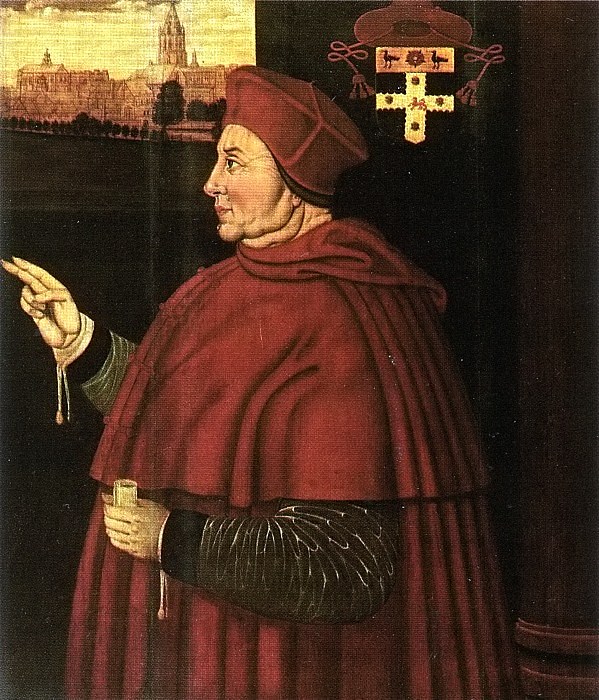
Tudor playboy, musician, sportsman, passionate lover, wife killer, church destroyer, (and saviour) in one.

American WASPs are 'P' because of he.

And Shakespeare has a play with the title, 'Henry VIII'.

Well, it is also known as ‘The Famous History if King Henry the Eight’ but that’s far too long for the playbill and we already know the man is famous.

Not so the play.

I’ve just watched the first half of it in fact – from the BBC complete works.

Surprising really – intelligent matter. You don’t notice that when you read it – and I have only a vague remembrance of watching this performance back in 1979 so I only know it through a dutiful, once only, read.

You expect a different treatment of the characters – and much more vitriol against the Spanish (so far it is the French who have had to suffer a jolly good dose of Great English Xenophobia – can’t keep a respected enemy out of it). Catherine, Henry’s first wife, seems a most sympathetic character.

There is an ambiguity with Wolsey – everyone kicking at his common ancestry and ambition – but he is effective and another not exactly unsympathetic ‘representation’ (especially, one suspects, to a working class chap like Shakey).

And at this point there is a dreadful sense of fate weaving – a dark thread slipping into the cloth of gold.

Is there anything anyone could have done?

Which brings up the parallel with Romeo and Juliet: Several times there are little stage actions and theatrical moments that remind one of the earlier play. There is the masquers interrupting a feast, for example, and a man singling out a young woman – with talk of hands; there is the old worldly wise woman talking to the young girl who pretends an innocence not entirely believable, but not hypocritical.

But with R&J you know it didn’t have to be like that – here there is no escape – and it is not just a personal tragedy, it is National History.


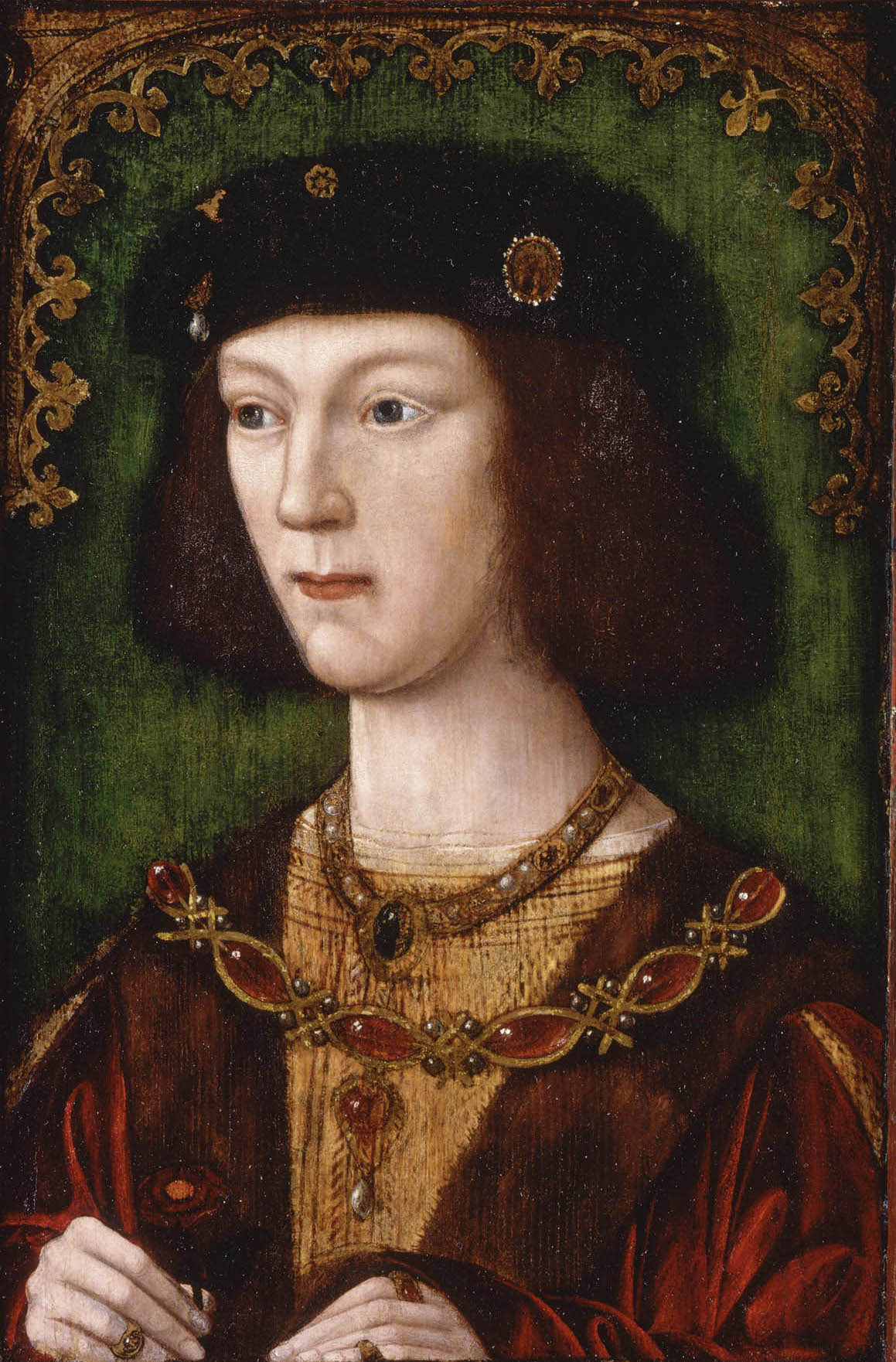
(Image at the top is the 18 year old, newly crowned king: You start to think the poor bugger could have been manipulated into a marriage when you look at that!)

Thursday, May 10, 2007

Birdseye frozen fishfingers


You sometimes come across something in the shops which awake long forgotten memories - this time it was Heinze ketchup sending me off after fish-fingers.

The delight in slices of white bread, buttered thick (frozen butter essential - to melt when in contact with the too hot fingers) overdose of ketchup designed to dribble and create extra washing, and sheer physicality of biting through that lot - oh, heaven.

Bardseye has done the same for me - not so old or frozen and image, but almost as physical. After a period away from the Bard, he has started on one of those topics that have my mind stimulated.

Expect more posts coming this way.

Wednesday, January 31, 2007

Blow Blow thou Winter Wind . . .

With winter finally here, a cutting wind has been blowing - the sort that fixes the face with a rigid mask of hurt. I had only been out of the flat a couple of minutes, was just passing the old city walls in fact, when the tell-tale signs of burning cheeks and stiffening skin set in.

Not for the first time, Shakespeare's rather biting song, 'Blow Blow thou Winter Wynd' comes to mind.

What makes a cold wind bitter?

Physically I have been out in low temperatures - well, well below zero - and not felt uncomfortable. But the instant a breeze gets up - and it doesn't take more than that - thoughts of hot black current and gin; a warm fire; toast, melting butter and a thick layer of pate flood the mind.

Some of the bitterest winds happen in England - not the coldest of places in winter: I have known Moscow living Russians return from a January visit to London only to complain of how cold England is - this done by people who live with the snow on the ground and a forecast of plunging overnight temperatures (it already being -10 degrees Celsius).

There is something about the moisture - a bit of rain in the air and life becomes miserable; a damp coldness chills far more than snow; cold wet jeans are killers in exposed conditions.

For Shakespeare though, these whips of nature are nothing compared with the attitudes shown by man to man.

The winter winds are, "not so unkind as man's ingratitude."

An interesting concept – cold, cutting ingratitude.

Hatred I assume is hot: There is animation and energy in the tempest of hatred.

To be ungrateful requires the cutting down of the flow of energy – the freezing out of emotions, an immobilisation of natural life forces.

Feigning friendship’s chilling kiss brings no thoughts of the thaw to come, only of the lonely grave.

Thursday, January 18, 2007

New Blog

Books Reflected: Hardy and Romania

I will put all the literature reviews at this site from now on.

Wednesday, December 27, 2006

Blood

"... most people forgot that the very oldest stories are, sooner or latter, about blood."

(Hogfather, Terry Pratchett)

A Revolution is about to happen in Romania.

This is the last Christmas people will legally be allowed to kill pigs by 'sticking' them.

For those who don't know what that means - basically cutting the major blood vessel in the pig's throat whist it is still alive and letting it bleed, slowly and noisily, to death - ostensibly, in order to catch as much of the blood as possible (for black pudding making) as the still beating heart pumps like mad in the extremely distressed and dying porker.

Another view might be that the European Union's animal cruelty laws are about to bang another nail in the coffin of traditional culture and ethnic life styles: Romania joins the Union on the first of January.

The two weekends before Christmas are the traditional 'Pig Killing' days in this part of the world.

I was reminded of this fact Saturday morning when the squeals of the 'first sacrificed' filled the village.

Looking across from the vantage of a hillside location, a number of large fires were being started in courtyards and a heavy haze was settling in the still air. The fires are used to burn off the bristles and to boil the copious amounts of water needed to process the carcass of a full-grown pig. Burning pig flesh and hair soon added pungency to the normal aroma of wood-smoke from domestic fires.

I have become quite used to 'country ways' and have little of the townie's qualms about killing animals for food (or clothing - try living without a fur hat in the cold winter temperatures of Eastern Europe, say -15 degrees Celsius, on an income of under 100 Euros a month which isn't sufficient to buy the petrol-derived-artificial-fabrics 'politically-correct' fashion dictates) but 'The Pig Killing' still makes me angry.

There is no need for it - a bullet (or bolt) in the head and hoisting the dead animal up in order to let the blood drain under gravity is just as effective (but try telling that to the 'we've always done it this way and it tastes better' brigade).

What struck me this year though was the amount of blood wasted - not many people seemed to be collecting it.

As I walked through the village to go and buy supplies of bread and beer I had to step over several streams of blood and water flowing out of the courtyards across and into the channels which run down to the valley's main brook.

A couple of times I had to step through sheets of red which had spread across the muddy road.

Once I passed a rather furtive looking dog – there are a number of mangy village mongrels whose parentage and ownership is somewhat hazy – which had taken possession of a string of guts, and was mixing bouts of furious chewing with dragging its prize to a place of comparative safety.

Another sign, I thought, that the sausages were not being made.

Then my mind went walkabout.

‘Now that’s a sight you won’t see in the centre of Manchester! In fact, when do you see blood in Manchester?’

And, ‘I bet Shakespeare saw blood as a child – in fact, they’d have been sticking pigs at this time of year in Stratford, back then.’

There is a lot of blood in Shakespeare.

Watching death on TV – even real death, in wars and executions (Christmas in Romania is the Ceaucescu-execution-on-TV season too) – is not the same. Blood is distanced. It is contained, without the smell, at the control of a switch.

In films and theatre, nowadays, it is Kensington Gore, and no matter how realistic it seems, the disbelief is suspended and deep inside the spectator’s head, it is not blood. It is not death. And most modern theatregoers have never experienced real blood and death anyway – sanitised hospitals and ‘Brompton Cocktails’ rule.

They used real blood – pig’s blood in fact – at, The Globe.

And there was a daily familiarity with the reality of killing – from childhood.

The children and grandchildren are involved in my village still – keeping the fire going, fetching and carrying, watching.

I am reminded of the drowning kitten poem of Seamus Heaney – Early Purges.

There will always be people who do the ‘dirty work’ – the executioners (and surgeons) – and killing should be humane – but the rest of the world is losing its grasp on one aspect of reality essential and omnipresent: Blood.

Tuesday, December 12, 2006

Demon Drink

(or No more Cakes and Ale)

One summer, not that long ago, I spent a weekend in a remote village in Romania - so remote in fact there was no permanent vehicle access - cars drove up a dry river bed in summer to get to it - in winter, cars didn't.

It was there I learnt about water drinking:

Animals do - humans don't.

Humans drink wine, with breakfast, dinner and tea - even children drink wine - or the very young, milk. Herb tea would sometimes be taken for illness.

It isn't alcoholism - although it can easily spill over to that - and the associated domestic violence was an accepted part of life: It is the only safe way to live in a world where the water is dangerous (and science hasn't penetrated - schools? Boiling water cleans it of disease?).

Elizabethan England was the same.

Small beer (low in alcohol) was the Elizabethan 'water'. Every housewife made it at home, children drank it in school, and clergymen knocked back a pint before giving the Sunday sermon.

Strong ale was a social drink leading to drunkenness (and a reported cause for Shakespeare's death). Wine for the rich; cider in certain parts of the country.

No wonder then that drunkenness and drink is quite a common theme in the plays of Shakespeare.

The Porter in Macbeth is drunk.

He talks about drunkenness – and talks in a most vulgar way (it is also, in the hands of a good comedy actor, exceptionally funny).

Modern western audiences, with their convoluted views on alcohol and alcohol abuse, don’t see what Shakespeare’s audience see. An audience in America might be a lot more ‘puritan’ in outlook than one in England, but missing in both is the fundamental necessity of drinking ‘beer’ - or it’s fermented equivalent – as a preserver of life.

Also missing (although less so in parts of the USA) is the essential Co-Text to Shakespeare, the Bible (and associated Elizabethan Homilies and Sermons).

The first thing that came to me when thinking of the Porter Scene, was the text used by Luther on his First sermon on Advent – Romans, chap. 13 vs. 11 – 14.

The key verse is this:

13. Let vs walke honestly as in the day, not in riotyng & dronkennesse, neither in chaumberyng & wantonnesse, neither in strife and enuying.

Is there a better comment on Macbeth at this point in the play?

Macbeth is working at night, the porter talks about the carousing and drinking, about ‘chaumberyng & wantonnesse’ (lechery) and Macbeth himself, who enters quickly, represents envy and strife (although the porter does talk about fighting drunkeness).

It is worth thinking about Luther’s comments on the quoted verse at this point:

“The six works mentioned suffice to teach that he who lives in the darkness of unbelief does not keep himself pure in his neighbor’s sight, but is immoderate in all his conduct, toward himself and toward his fellow-man.”

When we watch Macbeth and Lady Macbeth ‘doing’ the killing, we get wrapped up in the tension and magnitude of the action: We do not think – oh, should he be doing that?

The Porter’s scene gives us space – not to relax, not to relieve ourselves, but to think.

We have an immoderate commentator – reminding us of the darkness of unbelief: Pointing, in the clearest possible way, the path Macbeth is treading.

Lady Macbeth has used the word drunk a couple of times by this point.

She talks of hope being drunk – and then sleeping off the effects.

More interestingly, she enters (Act 2 ii) and says – ‘That which hath made them drunk, hath made me bold’. She has been drinking – but what reads like simple Dutch courage to us, has the smell of sulfur around it:

Honest men it has incapacitated; the evil made bold.

Other drinkers in Shakespeare include Falstaff. If it is true that Falstaff has his origins in The Vice, then his constant drunkenness and whoring support the notion that an Elizabethan audience would be wary of such activities and, no matter how amusing he seems, see his route to the gallows is clearly marked out – lined with primroses maybe.

And a point worth making here is the audience watching Macbeth’s Porter could well have Falstaff in mind – surely it is the same actor playing the parts?

Which brings on the question – which parts did the Porter double? If it is a witch – his entrance as the Porter would instantly link evils.

What does this say of other drunks and drink scenes?

Iago uses drink to bring the downfall of Cassio – Iago playing another Vice/Morality play figure, Good Fellowship!

In Hamlet and Antony and Cleopatra, there are drink scenes with negative connotations.

In Julius Caesar though, and 12th Night, surely drink is looked on slightly differently? Antony is praised by Caesar for ‘loving drink’.

And Toby Belch’s repost to the Puritan Malvolio, ‘Because thou art virtuous, Shall there be no more cakes and ale?’ surely has a double edge.

Friday, December 08, 2006

If iness

(On Auden's Poem, If I Could Tell You)


Daniel Barenboim, at the start of this year's Reith Lectures, reminded his audience that it is not possible to talk about music - only people's reactions to music. Sometimes I think that this is also true about literature - especially literature which uses words with the intensity Auden manages in this poem.

If asked,

"What is this poem about?"

I'd answer something like:

"The fearfulness of unknowable inevitability."

For me, it is a poem which touches on the limitation of human reasoning, which asks unanswerable questions while longing for certainty, which expresses an 'existential angst'.

But above all, it is a love poem.

Let me start with the uncertainty.

Two other 'If' poems come to mind - 'If I should die' and Kipling's, 'If'.

What is noticeable about both these is the certainty of them: Things will happen, states of being will come into existence, under certain conditions.

Both go, If : Then!

There is a 'knowableness' here. We can predict the future; Cause and Effect are in observable operation.

In contrast, Auden's 'If' leads to 'would' - and the unspoken, 'But I can't'. It expresses an unfulfillable desire.

I think this is most clearly stated in the third stanza. What is wanted here is knowledge - of the future, of "fortunes". This suggests not just what will happen, but how good (or bad) will it be?

An image, of Adam and Eve, came to me while thinking of this stanza - of Adam saying these lines to Eve, and Eve popping off to grab 'the fruit of knowledge' in order to satisfy both their desires.

If I can pass beyond the superficiality of this (and it makes me smile, I must admit), the 'tree of knowledge' myth does reflect a deep, possibly genetically pre-programmed, desire in all humanity for a patterned, readable, knowable existence. Our Human curiosity demands answers.

The fourth stanza tackles a couple of these demands:

"Where does the wind come from?"

And:

"Why do leaves decay?"

Human 'reason' can take us so far - scientific answers can be given about the physical world - but Auden doesn't seem to mean this sort of answer when he posses questions of origins and reasons: His is a metaphysical demand.

The fifth stanza has moved firmly beyond 'realism' - we have roses with wants, and visions becoming manifest.

Except, we don't.

We have a 'Perhaps' at the start. And I 'hear' a tenderness in the tone of voice - especially in the last line repetition of the 'if I could, I would' sentiment.

This is, after all, a 'Love Poem'.

One of the forces behind it is the desire to satisfy a partner: Which begs the question, "What thought or feeling has the partner expressed to provoke this response?"

Is it a desire for knowledge of their future happiness? Or was it an expressed fear of their love not lasting?

Or is the poem 'more cerebral', like a Shakespeare sonnet - provoked not by an external prompt, but by an internal searching?

Shakespeare’s sonnets also remind me of the themes and images used by Auden.

Time's influence on external beauty is to register decay

Internal beauty is eternal.

Whether it is the 'too short a date' of a summer day, or time's 'I told you so', there is a price to pay for living:

The leaves decay.

We exist in nature –

'too hot the eye of heaven shines',

and winds blow - even if we don't know their source.

But there is something beyond this reality - Love,

'the ever fixed mark';

love which the 'I' of both Shakespeare and Auden, feel and know - and confirm in their poems.

The final Shakespearean quality I find in the poem is in its use of form.

This is not a sonnet - but its form carries as much weight and contributes considerably to the meaning.

There is a thudding base line of repetition - Time, Time, Time; I told you so; I told you so; I told you so.

This contributes considerably to the overall feeling –

Time is inescapable: Consequence inevitable.

The repeated, 'If I could, I would' gives that dreadful sense of the unknowable.

The final twisting of 'Time will', to 'Will Time?' drags in a desire for certainty, which the final defeated 'If I could, I would' can only admit to.

And a final poem this overall encounter with time, nature and love reminds me of is ‘Dover Beach’ by Matthew Arnold.

There the voice of the narrator conjures up the great questions I feel are touched on here by Auden in what is quite a remarkable poem.

Sunday, December 03, 2006

Luther, Bishops Bible, Macbeth

Just been reading through Luther's Sermon for the First Sunday of Advent (don't ask why - I am not even a Christian).

Couldn't stop thinking of Macbeth all the way through - constant references to light and dark, to faith, to things like:

vices that seek material darkness and secret places.

and

The proverbial expression “shameless night” is a true one. Works we are ashamed to perform in the day are wrought in the night The day, being shamefaced, constrains us to walk honourably. A Christian should so live that he need never be ashamed of the character of his works, though they be revealed to all the world.

Now, I am not suggesting that Shakespeare had this particular sermon in mind, but I do think it is worth remembering that the intensity of this - the repartition of light and dark, the dragging out of the christian symbolism, the debate and discussion are part of the Elizabethan Religious experience -

Something like:

12. The nyght is passed, the day is come nye. Let vs therfore caste away the deedes of darknesse, & let vs put on the armour of lyght.

13.Let vs walke honestly as in the day, not in riotyng & dronkennesse, neither in chaumberyng & wantonnesse, neither in strife and enuying.

Romans 13: 12/13 (Bishops Bible)

Would be a familiar text to the audience - especially around Christmas time. Do we know when Macbeth was performed at court?

(Just a spontaneous thought)

The next jerk in my thinking was about the writing for readers:

Luther is writing - for reading out loud: Do we know if it was still common practice to read 'out loud' in Shakespeare's day?

I recall a production of Faustus which had him, in the opening scene, moving from music stand to music stand to read out loud quotes from his learned books.

If schools still maintained the practice (and I am again reminded of the Muslim world - children learning the Koran by heart - by reciting out loud) - and 'papers' were delivered 'viva' (still in the western academic world today) in the universities - how far apart were the practices of writing for the theatre and writing for a reading out loud 'readership'?