Sunday, April 06, 2008

Background ... forever background


As I lay in bed this morning, instead of music, I Sunday-morning-indulged and listened to an 'In Our Time' podcast I had downloaded a week or so ago - on The Dissolution of the Monasteries. It is still 'listenable-on-line' by clicking on the link - it is a showcase of clarity and excellence in discussion.

Not quite Shakespeare's time - although much closer than people realise: Counting history in terms of Kings and Queens sometimes lends a distance which shouldn't be there: The time between Fat Henry's theft and Shakespeare's Elizabethan birth is much shorter than one would think.

What I found fascinating at first were the parallels with modern Romania and the 'Dissolution of Communism'.

The monasteries had an apparent function associated with belief - they percolated into all aspects of community and into many people's individual lives. Economically they had a powerful control over vast resources (up to one third of the land of England was theirs).

No surprise then that there was a sense of loss at the dismemberment of the system resulting in a public outcry from one section of the community (The Pilgrimage of Grace). This was echoed after the fall of communism in Romania, not least amongst those economic elements which had been subsidised and supported under the old system.

Importantly, there was a lot of support for the change - not least from within the system itself - Erasmus was a good Catholic - and, however later historians and partisan fighters might colour the change, it seems there was already a movement away from monasticism - it was a system waiting to fall.

But I don't want to focus on the causes - it is the aftershocks and their immediate consequences which interest me.

Education changed - schools became more significant: Habergham High, Burnley, where I worked when Romania had its recent revolution, was founded as a small town grammar school in this period; The Shakespeare School, Timisoara where I first worked in Romania, was founded immediately after communism fell.

Shakespeare himself most likely benefited from this educational boom - his wife not.

What has come with the loss of the certainties of communism is an open questioning and the growth of alternatives - something similar must have occurred after the monasteries fell. Prayer and 'the certainty of salvation' proved rather ineffective against the legality of Cromwell (Fat Henry's man); Relics proved to be just that - old and dated.

Surely we find this questioning in the plays? Not, I suggest, as a direct link - but as the ripple still travelling across the pond minutes after the fish jumped in the evening twilight.

And the economic shifts that occurred - the enrichment of the middle sort, the need for poor laws, issues of land ownership - all colour the texts acted in the globe.

It makes me hopeful for Romania - although I doubt whether we will produce another Shakespeare (sorry Tudor).


Technorati Tags: , ,

Saturday, April 05, 2008

Things coming together!


A picture of the route has almost been formed - and a starting day set: It won't, I imagine, come as a surprise to people to know I will take the first steps on 'St George's Day'.
A surge of ancestor pride - I refuse to accept it as Nationalism, and patriotism is too sexist for my tastes (distinctly "Macho" if you live here in Romania).

A couple of interesting points and ideas have popped up as I've researched.

One concerns the ubiquitous 'Greensleeves'.

I had, along with countless others always thought this was possibly composed by Fat Henry (8th King of the name in the English realms).

Apparently not. Too modern for him to have done. But quite possibly written around the time Shakespeare was starting out as a sonnet writer - remember that.

I am also, as you might have guessed from that little snippet, working my way through the music of the period too - and came across a great double cd - Celebrating Shakespeare: This World's Globe.

I'm also getting heavily tied down in the church music of the period and taking every excuse to listen to William Byrd.

And final snippet (No 3, for those counting) - Dido, Queen of Carthage! By Mr Marlow (e-refused).
Not a play I know well, possibly the first Mr M. wrote - with another (so Elizabethan).
What got to me was the almost opening - after a prologue of gods and things, there is a Storm.
Now, read that if you dare and refuse to connect with Shakespeare's 'Tempest' opening. Replace Prospero for Jupiter - Hermes - Ariel; We've got a daughter and a man washed up on shore - with his son ... all echoing the latter play - and all so much poorer!

I am tempted to suggest that this could well be a play Shakespeare acted in.
(If I was really pushing it - and speculation is firmly drifting into dreamland now - I'd be tempted to say it could well be the first play Shakespeare acted in! And did he play Jupiter?)

The final scattered thought comes from slightly later in the same play - Aeneas has one of those speeches which point out beautifully the difference between Shaksper and Marlow (e-less in Timisoara): The mighty line.
It's a great speech to 'Bombast' out. Is this the sort of thing Shakes was trying to copy early on?


Technorati Tags:

Friday, April 04, 2008

Models or laziness?

There is a a post over on Shakespeare Geek which brings up the tricky issue of giving essays and having to write about Shakespeare and his work.

Whilst I am tempted to rant about the low level of the questions considering the age and location of the original setting of the task, I shall restrain myself. (But the gentle strains of 'Rule Britania and God Save the Queen throb away under this post.)


We're in the territory of 'originality' and 'personal response'; of having your own ideas and not being constricted by others; of predetermined requirements and (dare I say it?) THE CANON.

What strikes me as most pertinent is the education Shakespeare would have suffered - and which seems to have resulted in his ability to put pen to paper to scribe some of the greatest things ever written.

The models he would have followed were enforced across his bare backside with a bunch of birch rods - think of the reluctance of the schoolboy going to school 'like snail'.

He would have had to tightly follow the models of classical Latin writers and to learn to adapt and rephrase the ideas of others rather than be 'creative' (Lunatics, Lovers and Poets).

There was a movement in the 1960s in England to dump all that uncreative nonsense and let pupils 'express themselves': It produced a lot of very bad poetry (not recycled) and blinded an awful lot of people to the need for going beyond a draft.

It also produced me.

I don't teach that way - although I started off following the model of my teachers (all teachers should be forgiven their first 10 years - they are simply trying to break away from the tyranny of their own education).

Nowadays it's all 'models' and genre: If you want to do this, you need to do this, this and this - be creative within the bounds.

Much like Shakespeare was taught (although in those days there was a lot more 'acting out' done in the class - and I suspect fun, as long as you did what you were told)


Technorati Tags: , ,

Sunday, March 30, 2008

serendipity


A couple of things sent this wonderful word bouncing around in my head today.

First was watching a couple of ‘turtle doves’ flapping around in one of the parks down by the river.

I watched the Kevin Kline Midsummer Nights Dream last night – and thoroughly enjoyed it. I’m sure I’ll have more to say on it at a latter date – but today the line, “Begin these wood-birds but to couple now?” popped (not poo, this time) up when I saw the birds.

It was the colour that did it – and the naked young couples in the film as the line was delivered; Lots of very fleshy pink. Same as the birds.

I’d always thought of the birds mentioned as wood pigeons (well, I am English and did grow up in urban Manchester in the 1960.s) but Shakespeare must have meant their close relative, the ‘cooing’ or ‘turtle’ dove.

I’ve a couple visit the shelf outside my kitchen window each morning (sorry, I feed the little buggers); they’ve been around for over a year now. They tried to breed last year – but I think they were too young. The nest they built was destroyed in a storm and the eggs in it smashed. They’re looking at a different site this year. Fingers crossed for offspring.

What’s noticeable (and the constant cooing makes them noticeable) is they are almost inseparable – I haven’t checked but I think they must pair for life. So, when Theseus calls the lovers ‘wood-birds’ and says they are beginning to pair – he has seen more than linkage – it is a fidelity shining through too.

That’s what the flapping in the park reminded me of.

Second bit of serendipity came almost at the same time.

I was reading through Peter Brook’s Evoking Shakespeare and getting fired up to review it when, at the end of what was a talk given in Berlin, he answered a question – and came out with something so simple, so obvious I’d not thought of it (bit like the doves really):

(To paraphrase)

Shakespeare was born with a set of abilities, principle of which being a prodigious memory and a capacity to listen and observe; he used these capacities to the full when he wrote his first play.

At this point of first putting pen to paper he hadn’t ‘lived’ – hadn’t the experiences he would be able to add to these innate abilities to write the later ‘great’ plays like ‘King Lear’ and “eventually the Tempest”.

“… one sees a very interesting relationship between what’s inborn and what is developed by life.” (Evoking Shakespeare, pg 30)

Well, yes – that’s exactly what I want to see in this odyssey through the works, I thought.

How much is nature, how much nurture?

(Hopefully the doves have learnt to build a better nest this year.)

Saturday, March 29, 2008

Hack adaptor?


First play on my list is going to be Two Gentlemen of Verona: And just to prepare the ground, I thought I better check out the sources.

One of those intriguing snippets has poopped (poo, not pop) out about the story - In the words of Wiki, where I checked the original, Shakespeare, "... could have learned of it from an anonymous English play of 1585, The History of Felix and Philiomena, which is now lost."

Hold on ... yesterday we decided Young Will was an actor - he was on stage in other people's plays, and they are going to have an influence on what he writes ...

Today we get his first play is possibly an adaptation of an already written adaptation of a 'prose romance' (Diana Enamorada by the Portuguese writer Jorge de Montemayor).

And hiding in the wings is the second play - The Shrew! Which could also have a source in a previous play - although Wiki ain't good on that: Will someone go and correct them please?

I suspect there is a theme developing here - was Shakes employed to steal and do cover versions of the successes of other theatres?

Makes sense of the way both he and his theatre group kept close his own later works - he learnt from his own experiences.

It also gives a certain piquancy to the much vilified Robert Greene:

There is an upstart crow beautified with our feathers that, with his 'tiger's heart wrapped in a player's hide,' supposes he is as well able to bombast out a blank verse as the best of you; being an absolute Johannes Factotum, in his conceit the only shake-scene in a country.

Robert Greene
Groatsworth of Wit (1592)

Friday, March 28, 2008

You're Kyd (ing)

Not content with Howling at the Moon (Barking, Barking!), I'm also dancing with the Hares; it is, after all, still March.

Resisting the temptation to just close the door and start, preparations go on.

The Sonnet issue is resolving itself - there are blocks of sonnets linked together that can be treated as a whole early in the journey - one fascinating little snippet is sonnet 94 being quoted in Edward III (which is dated early).

Today's teaser is what was he doing before he wrote?

- I'm dismissing teaching in Lancashire (I've lived there, I am a Lancashire Lad - I've taught there: I didn't become Shakespeare - ergo, neither did Shakespeare).

He was, of course, an actor - possibly with his wife's encouragement. (La loon, la loon.)

Therefore, he acted - what?

Well, chances are he did some Marlow (e-less) and Mr Kyd was popular 'on the block' too.

Right - need to at least read those two before I set out - and it's looking like The Spanish Tragedy gets the go-ahead (because it was on the shelf in the Library when I was there yesterday - and its on-line, and I like it so re-reading is not a problem).

Some of the best Marlow (e-less) was produced after the first Shakespeare - so, Tamburlaine the Great needs reading before I start, but Faustus after (?).

Damn map is glaring at me though - Holinshed's Chronicles (2nd edition) were published just before .... no, 'tain't a play, didn't act it. Might read bits at appropriate times.

Thursday, March 27, 2008

Always need to prepare ...

It is looking very much like I'll be starting with a sonnet!

Andrew Gurr suggested it some time ago - sonnet 145 is likely to have been written early on - possibly when Shakespeare was still in his teens.

There is the serious possibility it was written to Anne, his soon to be wife - which makes it sort of 'sweet' and "Ahhhhhhh"-able.

This would certainly be the earliest of his writings.

I am having not-much-fun trying to sort out the dates of the sonnets - they were collected together and published in 1609 - and arranged in an order that makes a sort of narrative - but they were written in a different order.

Possibly the first 17 were in fact written a little later than the next sequence; and the dark lady poems earlier than the ones before!

What a life!

I am also doing all my preparation with a little programme available from the OU called Compendium: If I ever find a way to do it I'll publish the 'map' I make to go with the journey.

(Just think all journeys should be mapped.)

Wednesday, March 26, 2008

odyssey


The question has been raised - Have you read all of Shakespeare?

Well, yes, I have - several times in fact. But it is my profession in a way.

Not that I haven't had great pleasure from doing so - even the poems. And I have returned to many of the works repeatedly.

I suspect I am now coming to the end of my "intellectual wanderings or quest": Certain signs in my body prompt expectations of mortality.

Siren like, the words call again.

I have decided, on a whim, to make a final pass through the complete works and have gone into preparation.

Keeping faith with the theatre, I am going to do the journey in performances. Of necessity they will be mainly on DVD - Romanian theatre is limited in live performances, and, as it is Shakespeare's words I want, limited there too.

I hope to get in a trip to The Globe - and possibly the RSC too.

I am fortunate to have the local British Library - they have nearly all the BBC Shakespeare for loan (although, irritatingly, someone has stolen Titus). And I have a selection of my own of the more popular.

Just to add spice, I have plumbed for an unusual (although quite logical) route: I am going to do it in the same order as written.

Now, I know this is a contentious issue - so I am following Stanley Wells and the Penguin Shakespeare Chronology. No objections accepted.

I hope not only to revisit old friends, but maybe get a couple of insights on the way - juxtaposing what was in the craftsman's mind as he worked.

Needless to say (so I will) I'll be blogging along the way.

A travel diary forsooth.

Sunday, March 23, 2008

Shakespeare's Wife

Reviewed Ms Greer's Book over on Books Reflected:

http://bookreflect.blogspot.com/2008/03/honest-witness.html

I suspect points from the book are going to keep making an appearance here for some time to come.

Selective Truth

Romanian football might not be everyone’s starting point for a quick look at Henry VI (part 3) – but there are parallels.

(I suppose, for cultural clarity, I should, at this point make clear I am talking about the game for men with balls that are not an odd shape.)

Soccer in Romania is dominated by baronets – rich men who ‘own’ clubs. There are 4 or 5 of them and they are very ‘public’ in their ownership: Never a day goes by without one of them appearing on the television; usually it is more than one.

Partisan is an understatement – ‘rude ignorant pigs’ still a bit too subtle.

They interfere in their own teams to the distraction of the managers – buy players who are not needed and sell others without replacing them with anyone to ‘fill the gap’ the exiting player leaves. They complain publicly about the managers performance, undermine their authority continually, and begrudge them the bonus payments when they win. It is strongly suspected that one baron even bribes individuals of his own team to loose matches so he doesn’t have to pay out larger sums to the whole team if they win. Of course, he then goes on television and says the manager is not doing his job properly.

More worryingly they are regularly accused (and even more regularly accuse each other) of corrupting match officials and rigging matches through other nefarious practices.

These are not the mighty magnates of English football – truly rich men who stay quiet publicly, dig deep into their pockets and let the teams get on with the job. These are petty men – pale shadows of the greats they attempt to imitate.

And here is the first link to Shakespeare’s play – gone are the great men of the earlier instalments (apart from York – who exits in Act 1) - to be replaced by much smaller men – men whose vision is not broad enough, token representatives and partisan upholders of faith in themselves.

“Mink coat and no knickers” (as my father used to say).

They ‘ape’ their predecessors but do not seem to understand what it is they copy.

They exist for the moment – there is no real continuity: Strategy is short term only. And so too is their perception of the world they live in.

In Shakespeare’s play, the past becomes a thing for selective quotation – a truth for being economical with. Partial truths about the past are used to justify present actions – and are publicly invoked in that justification.

In exactly such a partial way the truth has been used in an incident between two teams here in Romania.

Straight away, one petty owner leapt in front of the nearest television camera and started screaming about ‘the rules’ the past, the way it was done …

He was quick to add blame for the official (who had just been hit on the head by a flying object – premeditated, according to the all seeing owner).

Dangerous stuff – especially as public disorder, already abroad, was provoked, and awaits a next encounter.

Such are the things of civil war.

What I am left with is the sense of small mindedness, of a gap left which needs filling with truth, with authority based on right, … a worthy King.

Wednesday, March 19, 2008

a sudden stratagem


(Or Shakespeare, the surgeon)

The doc has more or less grounded me - not too much excitement and, combined with a 'between courses' week at work - 'Nothing to be done'.

So, browsing away this morning, I took a look at the opening of the 'sundry times lately acted' True Chronicle History of King Lear and his three daughters ...'

Then I had a bath.

Ermmmm

It was a trick - the how do you love me question - count out the ways and I'll give you everything.

And a trick specifically to catch out his wayward younger daughter.


She'd tell him more than the others and then he'd spring the trap - right then, do as I say - just as your sisters have done - 'marry the man today!'


Shakespeare wields the knife - he cuts the trick.


Surgical precision converts Lear from trickster to madman: Senility floods, like a sudden summer storm, the landscape - and grey clouds darken every horizon.


Again, the empty spaces - it's the gaps that make the magic - not what you explain - what you don't explain.

Tuesday, March 18, 2008

In whose likeness?

Just recovering from a serious shock - Greer bbke has stuck the boot into one of my most cherished beliefs - Shakespeare was a rich man - he was, wasn't he?

Serious doubts, seriously expressed by the blessed Greer bbke !

Rather a lot of comparative evidence indicating that money is not the main reward for being the greatest playwright in England - and some serious 'looking into the finances' of 'er indoors'.

One of those naughty little thoughts instantly bounced into my head - all those biographers before who were convinced of Shakespeare's wealth - monetary, rather than linguistic - were they reflecting a material comfort of their own? And is 'The Greer' bbke doing the same - could her Ann really be a mere reflection of the self regressed?

If it is - it is very convincing - and, as I return to plough through more of the 'biography, a dread creeps around the outer extremities of further shattering illusions.

Thursday, March 13, 2008

Shakespeare Geek goes pimp!

Duane, who does a very worthy blog, linked to above (in fact I read it regularly - even though we don't see eye to eye often: He actually was disparaging about the Sainted Greer bbke) is offering to give away some books.

Anyone from the US reading this this week or next should go beg!

In the rest of the blog there's some good stuff - and he's a great source of odd links.

Been a bit of a ding-dong on Iago too.

Wednesday, March 12, 2008

What's in a name?

A question to think on:

Why does Shakespeare call the play Othello, Othello?

And why is Julius Caesar, Julius Caesar?

Well, of course, the first thing to notice is that they weren't:

Julius Caesar, as first published in the First Folio was called:

THE TRAGEDIE OF
IVLIVS CAESAR.

And the word Tragedie makes a difference -

Othello was called:

The Tragedy of Othello the Moore of Venice

Here we seem to have got the spelling right - but notice the emphasis on Othello's Mooredom and his Venetian-ness!

I don't think we have the playbills for either of these plays - but I wonder what the audience entering the Globe in London thought they were going to see as a consequence of the playbills posted?

By putting the character's name in full view - they become a focus - and that is something we tend to loose a sense of when we spend hours studying the text.

With some plays though, it becomes more important to know exactly what Shakespeare called it in the first place:

In the Folio we have:

The second Part of Henry the Sixt,
with the death of the Good Duke
HVMFREY.

Which we reduce down to Henry the Sixth, Part two- decapitating poor old uke Humfrey!

But if you go back 30 years to the first performance it had a very different title:

THE
First part of the Con-
tention betwixt the two famous Houses of Yorke
and Lancaster, with the death of the good
Duke Humphrey:
And the banishment and death of the Duke of
Suffolke, and the Tragicall end of the proud Cardinall
of VVinchester, vvith the notable Rebellion
of Iacke Cade:
And the Duke of Yorkes first claime unto the
Crowne.

Now - not a mention of part 2 nor a mention even of Henry 6! Is it even the same play?

A rose, is a rose, is a ... sweet briar!

Monday, March 10, 2008

Burn, Baby, BURN!


Have we taken the tragedy out of Romeo and Juliet?

Modern audiences believe ‘it is a beautiful thing to die for love’ – deep sighs all around. They are following in that nasty Romantic ‘suicide is beautiful’ nonsense.

The focus is on the wonderful resolution at the end of the story – the united families, the golden statue, the Happy Prince!

Ker-plonk!

What Happy Prince? He’s pretty unhappy and threatening dire consequences as well as begrudging pardon (possibly enforced by separate laws for the clergy).

And hold on – not just a statue, but a golden one? Do I get an echo of ‘Golden Idols’ here? Earthly treasure brings no reward in heaven.

And here is the bit where the tragedy has gone through the window – they go to hell! The two silly children commit suicide and are consequently condemned to eternal damnation.

Romeo and Juliet BURN!

There is the tragedy – that is what we, following the Romantic reinterpretation, have lost – not a beautiful pagan ‘cut out in stars’ ending, swelling strings and a beautiful death – cacophony, devils, eternal pain!

Bring back the Shakespeare!

Saturday, March 01, 2008

Shakespeare's Best

In our time have a programme on King Lear this week.

Click on the title above and you'll get somewhere near.

It's downloadable for the week and then available for listening on line for ever.

Love Melvin!

Good discussion - not least because it drops a couple of stakes into the heart of the much overrated Hamlet!

At least three of the four people know rather a lot about the subject (and one of them is Lord Mel).

Wednesday, February 20, 2008

Sins of the Flesh


(or, Size Matters)

Three sets of notes on Falstaff from the Play Shakespeare discussion forum.

Something I thought about watching the BBC Henry IV (i) was the saying – ‘every fat man has a thin man trying to get out’ – all the talk about size and tons of flesh is less a comment on diet than one on sins.
Quayle was ‘obvious’ in his fatness – made a thing of it in the way fat actors playing the part can’t. It's another, 'All the world's a stage ...' joke.

The BBC’s Merry Wives cast a ‘fat’ Falstaff – and the movement of the body is different. It wasn’t just a matter of the ‘quality’ of the writing (a question of different purposes anyway); it wasn’t quality of performance – it was flesh!

Falstaff’s flesh is metaphorical. You just know when you see the thin actor padded out he will take it off at the end – just as in the Elizabethan religious view, on ‘The Day of Judgement’, the thin good deeds of the man Falstaff will be pulled from the fat sins and weighed against each other in balance.

Sad

And:

Who acted Falstaff?

I re-viewed the BBC video and have come to the conclusion it is unlikely Hal was played by Burbage - it is just too small a part.

There are two Big roles - Henry IV and Falstaff.

Anthony Quayle in the BBC played Falstaff really finely - he brought out an intelligence and humanity that isn't often seen when the character is played for laughs - and it did make me question the idea it was a role for Kempe - Bardolf, yes, but Falstaff?

The other thing that popped into my head was the idea of Falstaff's domination of the play - often said to be accidental.

The production managed to balance the two 'father figures' and both dominate Hal - it is almost as if Shakespeare deliberately hides the prince behind these.


Just idle ramblings.

And one more:

The size of the part is one thing that makes me wonder – but that worries me less than the ‘acting’.

Falstaff is funny to watch – in a bitter, black, English humour way – but the acting requires those skills you’d associate with the really big characters – it’s a part ‘that’ll take some acting in the performing of it’ (in the almost immortal words of Bottom). It is not a ‘funny’ – there are several of them around Falstaff – and they last into Henry V – shotten herring (or the hangover after the (k)night before).

It is much deeper than the Twelfth Night drunk, Toby – although there are comparisons to be made.

The other niggle is, as I said in the original post, the idea of the function of Falstaff – he’s there for a didactic purpose, not just entertainment. He balances the King – he makes us question the role models the young prince has – and the role play in the tavern adds another dimension to the comparison.

In part 1 there is also the mirror held up to Hotspur – especially in the honour speech – but he too has his advisers – and I tend to link Falstaff more to them than to Hotspur himself.

Would the Elizabethan theatre use a comedian for this (and they very well might – which should make us rush to inspect all the ‘comedian’ roles)?

The doubling/tripling of parts, the linkages this makes in the minds of the audience and the ‘star’ system all add a dimension to the Elizabethan performances which is (as For -Soothsayer mentions) lost on us.

And if Burbage did play Falstaff – and went on to play Henry V – ohhhh what a tangled knot of implication there! (And what layer of joke in ‘the king hath killed him’ – and he lies in Arthur’s bosom).

I’ll repeat – all idle speculation.

Laughing

Sunday, February 03, 2008

Saturday, January 19, 2008

A good book


I came across this in the Guniad:

Bard times

which reminded me I really must tell you about Shakespeare's Wife - but seeing as Amazon UK seem to have sold out, and they are waiting for a new edition,I'll leave it for a latter post.

There certainly seem to be a lot of Bard Books around at the moment.

Friday, December 07, 2007

Brook/HAMLET

It doesn't get much better than this:

Saturday, December 01, 2007

Handless

Been unable to type as a consequence of operation on my hand - but soon back to normal, so finish of Othello coming - don't hold your breath though.

Saturday, October 20, 2007

In black and white 2:


2. Is this a question of Politics or Theatre?

I left off last time with a question – could Iago be played by a black actor?

It is a question with its origins in a debate that took place way back in the 70s when they were casting the first filmed version of ‘Jesus Christ Superstar’ – Norman Jewison the director, had cast a white Jesus and a black Judas . There was a bit of an outcry at the ‘negative image’ created by such a casting (remember, we are at a time when race issues were to the forefront of politics in a number of countries).

Quite rightly Mr Jewison pointed out that the ‘political correctness’ of those protesting was blinding them to the ‘unprejudiced’ nature of the casting – and that those objecting were, at best, misguided: What is trying to stop a black man from playing a major role in a major filmed musical on the grounds of the colour of a his skin if it is not prejudice?

I think this highlights the problem of political correctness and acting Othello – and also gives the best answer to the problem – to deny any actor the right to play any character in the play on the grounds of their race (and I’d add gender and culture) is just plane wrong – it is a denial of our common humanity and a clear example of prejudice.

It is also a common mistake ‘in understanding’ of the nature of theatre: Nothing on the stage is real – everything is illusion (and isn’t): All the World’s a Stage.

Shakespeare knew all about the illusions of life and the stage and one place he tackles it is in ‘A Midsummer Nights Dream”. His rude mechanicals hang on to the need to ‘bring moonlight’ into the hall they are to perform in – and they have to give the ‘lion’ a speech of denial – don’t be fooled, he’s really a man, not a man eater. Shakespeare is taking a quick kick at the literal minded (and dangerous) Puritans – but also exploiting what for many people at the time was an essential question – what is the nature of reality and the connection between the life we lead and what we really are?

No doubt exists in my mind that Othello is was meant to be looked on as a potential ‘everyman/everywoman’. (I also think the same of Shylock.)

There is a correction in the above paragraph is has been turned to was as I have pointed out elsewhere, the text we have inherited is incomplete: The director, actors and audience do not miraculously shed the contemporary when they enter the theatre – despite the illusions of costumes and design, the obscuring quaintness of some of the language and tedious programme briefs, today is ever present.

I live in a country, Romania, where once performances of Shakespeare could carry a revolutionary message – when Ian McKellen brought his Richard III to Bucharest, the audience knew it was about dictatorship and corrupt political government – just like that of Ceausescu’s.

Whilst not wishing to limit theatre to this potential political dimension, it is a legitimate concern at times and a legitimate function of ‘theatre’. Brecht, after all, did exist. The casting of a white man as Othello can be symptomatic of political and social oppression. How Brecht would have challenged such oppression in the theatre I cannot say – but I can be certain he would have challenged it.

But Stanislavski also existed. And Eisenstein. Russia, during iconoclastic, revolutionary times producing icons for the future of almost the oldest profession in its newest manifestation.

How we got to modern Hollywood from such noble ancestors beggars belief, but we did (sorry – I actually enjoy a lot of the output of Hollywood, but I’ve got my low-grade-intellectual hat on at the moment).

Film, as it appears in Western popular entertainment, promotes a deceptive realism. If a character is meant to be ‘Afro-American’ he has to be played by ‘a person of colour’. The only exception I can think of to this in recent cinema is Antony Hopkins – who played (excellently) an ‘interesting’ part in a ‘worthy’ film about a ‘black’ man whose skin colour was light enough for him to pass as ‘white’ and who eventually gets accused of racism against black students.

Mr Hopkins, of course, also did a brilliant job as Othello in the BBC Shakespeare.

With the majority of people’s exposure to acting and storytelling (and, I suspect, Shakespeare) being essentially ‘filmic’, it is not surprising that a recent conversation I had with one young man, to whom I had lent Orson Welles’ film version of the play, started with the question – “Why didn’t they cast a black actor as Othello?” He went on to say you could tell Othello was wearing makeup.

I wonder if he would ask the same question about a stage performance?

If he lived in the USA most likely – combine the political realities with the deceptive film reality and expectations would be casting to ‘type’.

Over in Britain there has been a tradition of black actors playing Othello (from Paul Robeson onwards) at the same time as more traditional castings such as Laurence Olivier (in a controversial blacked-up performance).

But then again, British theatre productions owe a much stronger debt to Brecht than to almost any other practical theatre theoretician. It is one of those delicious ironies that an approach to theatre designed to focus the audience on social and political issues can result in magnificent musical dross like ‘Cats’ – which, in case you didn’t realise it, employed some of the greatest of Britain’s Shakespearean talent in its original production.

So, to return to my question, is this issue one of Politics, or Theatre?

Yes.

You have to make a choice – Politics or Theatre: Power or Imagination.

They are not the only choices available nor, necessarily, the most important; neither are they mutually exclusive, but they are certainly potent and polarising.

But what about the acting?


Friday, October 12, 2007

In black and white: A question of Othello?


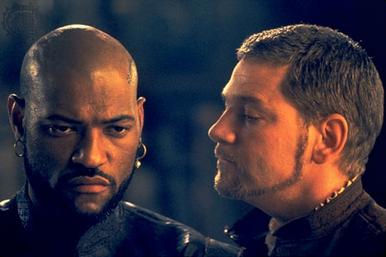
I’ve been looking at Othello – or rather, I’ve been looking at the skin of Othello. Over the last couple of weeks I’ve watched several versions of the play on DVD and, as a result of a point raised by in a comment (by Ian Thal), I have been not so concerned about the issues raised by the play’s text as about whether a white actor can still ‘black up’ and play the lead.

The answer is obvious – of course they ‘can’ - but then a more troubling word SHOULD replaces the can.

The more I thought about the question, the greater the tangle of ideas became, spreading out wider and wider through many aspects of both theatre and modern life. Three key questions did emerge however:

1. What effect does the social environment an audience lives in have?
2. Is this a question of Politics or Theatre?
3. Is this about typecasting?

I’ll try to tackle each of these issues in turn over my next three posts.

1. What effect does the social environment an audience lives in have?

There is no doubt in my mind that the social context is important to all performances of all plays – that performing Othello, for example in Northern Cyprus will have a considerably different impact from performing it in Moscow; a performance in a Burnley High School for a bunch of very mixed-race-and-religion teenagers, will not carry the same meaning as exactly the same production performed in a pub in Buxton.

All four of the locations chosen above are known to me – I’ve lived and/or worked in each of them. A white actor blacked up would have a varying significance to each member of the audience in each of those locations – but a more generalised reaction is likely to occur.

I suspect few in Moscow would even be aware of an issue existing – it would be considered ‘OK’. There is a frequently-aired-on-TV classic film about Pushkin where the main role is played by a famous Russian stage actor, blacked-up. I find it strange that, in a deeply racist modern Russia, the National Poet is not only thought to have been dark skinned, but to have had slave ancestry: A white actor playing him is ‘normal’ – and his mixed race origin almost a source of pride. Shakespeare’s plays are considered classics and what matters is the quality of the actor – and the idea of quality acting in Russia is something I will return to in a latter post.

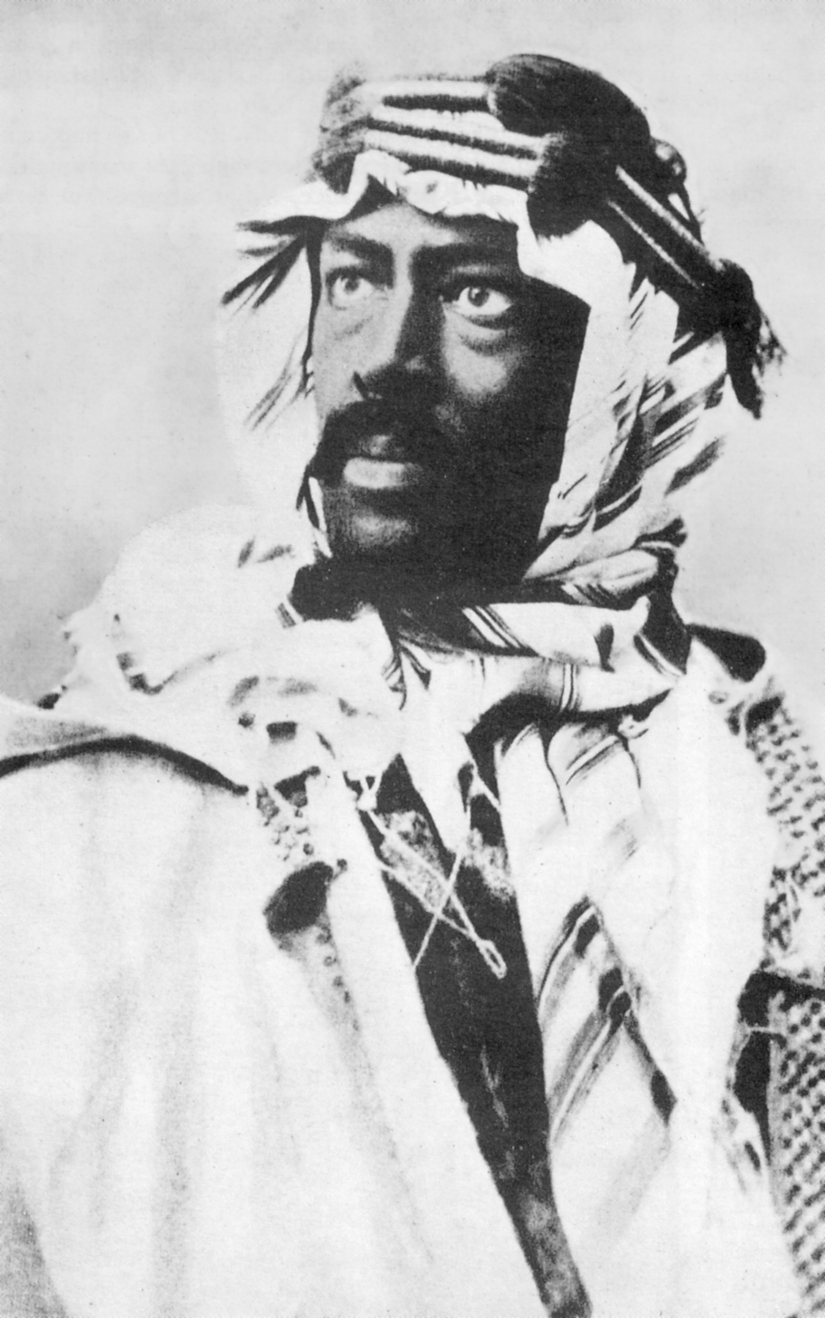
Northern Cyprus is somewhat different: Essentially a Muslim country, the location of the setting of the second half of Othello and very ‘British’ in many respects. Again, I have a sneaking suspicion that there would be little impact in the white actor Othello – as long as he ‘Blacked-up’ and didn’t go for the last-year’s-trend of lighter skinned muslim-ish Othello (after the Ottoman envoy picture). I can even imagine Turkish actors happily blacking up to play the part themselves (the ‘uncircumcised dog’ line would have to be cut though)!

What both of these societies have, which they would bring to the performance, is a different focus from modern American and British society with regards to social issues and colour. The word black does not carry the same resonance – in Russia a ‘black’ is anyone who is not essentially fair-skinned: Georgians are blacks to the Muscovite, as are Chechens, and people from Dagestan.

On Cyprus, Greekness and Turkishness are far more relevant than skin colour – Religion, language and culture are so much ‘at issue’ that Othello’s skin could be viewed almost as a tone rather than a colour: In Gazimagusa (former Venetian stronghold on the island) he would be a representative of a defeated European Christian colonial power, and his otherness just an aspect of a greater weakness and disunity which soon resulted in the Ottoman takeover.

The two locations in England bring up a whole set of different attitudes and there is a greater blur between the political and social concerns people will bring to a performance.

Colour and religion are connected in the UK – and the issue of Othello’s ethnicity carries a greater weight, with a different distribution, than in many other societies (including, I suspect, ‘Christian’ USA). Othello has to be ‘surface other’ – he can be other ‘olive’ he can be other ’black’ – but other is essential. But Othello must also be ‘us’ – homo – in both the sense of humankind and oneness: He is ‘yin and yang’ – he is innocence and experience: Angel and devil.

He is homo-genius and homo-simpleton!

In the contemporary mixed race, mixed religion, mixed-gender school, Othello becomes an internet of issues and concerns – a white male actor assuming skin colour is not a ‘nigger minstrel’ – and is; he is both a unity of Britishness and a relic of Elizabethan Englishness and ‘Blackamoor’ attitude.

A ‘black’ male actor – let us say with Caribbean antecedents – looses some of that friction but replaces it with others – race and mixed marriage is strangely brought more to the fore – a white actor, albeit with a black face, is still a white actor – a real black actor is black! In cosmopolitan London this might not signify – in working-class, mixed race Burnley, with its strong far-right nationalisms, it does.

And modern DNA analysis is digging up all sorts of skeletons – African genes brought into Britain with the Romans – and happily bouncing around in the gene pool of the whole of the British Isles ever since. Not to mention the realisation that a sizeable proportion of the 50’s immigrants from Jamaica and the other colonies were carrying not only the slave bloodline but that of the white slave masters mixed forcibly together.

Popular television programmes and national educational requirements mean that some of the audience in this school would know these things – and, hopefully, apply them to the questions raised by the play and its casting.

But what if the actor is neither ‘white’ male nor ‘black’ male – but Pakistani male? Or Jewish? Or Chinese? Each and every one represented in that school audience.

Surely all have a right to an Othello?

A couple of hours car drive away and you could be sitting the pub in front of the Opera House in Buxton during the summer festival – watching a performance of Shakespeare’s Othello (the Opera House would have Verdi’s take – where the question of painted singers doesn’t even raise a butterfly’s wind beat of doubt). Here you are much more likely to have a middleclass, ‘educated’ audience – used to theatre conventions and aware of the ‘classic’ issues – with a degree of respect for the traditions and an eagerness for novelty.

Would race feature in their thoughts more than gender? Is this a question of prejudice or of class? Good and evil in battle for the soul or greed and materialism as a source of the contemporary decline in culture and standards?

Yes, there would be a nod in the direction of should they/shouldn’t they black-up – but after all, this is the theatre – suspension of disbelief and all that – not to mention our own sophistication and the real issues of the play.

I know I am oversimplifying all four potential audiences - but there is a degree of truth (at least as I have witnessed) in all four representations.

As for answering the question, “Should a white actor black up to play Othello?” Well, I think I’ve got as far as yes – and no.

More intriguing a question is, “Could a black actor play Iago?”

(To be continued.)

Saturday, October 06, 2007

Let me not ...

Been you-tubing again:

Let me not:

Friday, October 05, 2007

Oh, the horror, the horror!


At first sight there isn’t much to connect Stephen King with Shakespeare – maybe even at second sight. But I was watching the BBC Othello yesterday when one of those ‘ermmm’ thoughts struck: Iago and Mr. Gaunt.

Mr. Gaunt, from King’s ‘Needful Things’, is unashamedly and unequivocally, a devil: ‘The Gaunt-thing hissed and shook its claws at them,” (pg 780 in my paperback version). He appears, however, a friendly, helpful, elderly man to almost all – delusion and reality.

Iago? Is he a devil or is he a man? Is he a human gone bad or a personification of evil? That’s one debate that’s not going to go away – but the unanswerability of the questions is key to the play – and as I keep trying to persuade people, Shakespeare’s greatness is in the questions he raises and not in any answers he doesn’t provide.

This is also the weakness of King – we get an answer - an ending (sort of happy) and a tag – it’s all starting again, which is so formulaic it is almost a sign of compulsive writing disorder. Evil is defeatable, the American dream is fightable for, small communities just need the right man to protect them, or else . . . blah, blah, blah.

Both Iago and Mr Gaunt work by constructing a false trail – trails that could, at first sight, seem simple jests – tricks and practical jokes which rely on the witless participation of others: King gives us Brian Rusk, Shakespeare, Rodrigo. Both use the weaknesses of their agents, but there is a difference in their victims.

Othello, Desdemona, innocents in black and white, do nothing to further their own destruction in the way Mr. Gaunt’s customers do – they do not, of their own free will, enter the shop. Iago is not playing with people’s bodies so much as with their souls: Whether he knows it is not at issue – he appears motivated by greed, jealousy and spite; he seeks Othello’s mental torture and physical destruction, not his soul’s damnation – but that is what Iago (almost?) achieves.

Gaunt is single-minded in his exploitation of a weakness in a culture – the pursuit of happiness at the expense of life and liberty. There is no chance of resisting because you have already made the choice – you are already damned and Gaunt simple takes you all the way. This dreadful inevitability is a criticism of American materialism and its pernicious effect on everyone from young children to religious leaders, from the town drunk to the town councillor. (Is this sounding as much like ‘sixties hippy’ to you as it is to me?)

At the heart of Shakespeare’s play is the impossibility of giving up free choice – no matter how many times you watch it, you think ‘ don’t believe him’, ‘don’t drink that extra cup’, ‘don’t . . .’: At no point is there an inevitability. Iago, right to the end, doesn’t think there is – in the final act he says he has either succeeded, or he hasn’t.

It seems to me that this is what makes Othello a tragedy – the possibility of an alternative.

It also seems to me to be the thing that makes Mr King’s book a Horror – the simple chain of cause and effect is inescapable.

Thursday, October 04, 2007

A girdle round about the Earth

How can I not think of the lines from A Midsummer Nights Dream on the 50th birthday of Sputnik?

And this is a taster of the company I work fors progress into the Space Age - gives a perspective I think to some of the things they get me to do!!!!


Saturday, September 22, 2007

Faustus Site and Performance


The BBC and OU have joined together to do a performance this Sunday.

Good site for exploring one of Shakey's rivals - and sources.

This should be available on line!

Click on the title above or on this:

http://www.open2.net/drfaustus/

Enjoy!!!!!

Thursday, September 06, 2007

Me at work!

Results of Shakey and You!

Click on the above or see me here too:

All the World's a Stage:


To Be:


Romeo and Juliet:


Voice of an Angel


(Well, maybe not!)

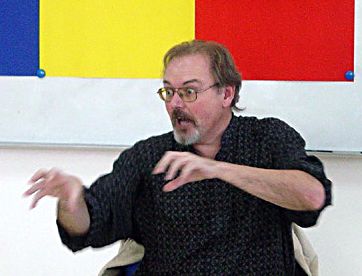
That's me to the right on stage leading the recent international workshop on texts held in Timisoara.

Click on the link to the name and you can hear me hamming my way through a couple of Shakespeare texts for Librivox.

Can't excuse myself really, but very limited equipment and somewhat rushed - still authentic Farrar.

(Willy Russel did say once that I was a, "King Actor - just like Orsen Welles: Maybe not good, but loud enought to do the BIG parts!"

Saturday, September 01, 2007

From a Southern Scot!

NOW!

Just in case you don't read the comments - that veritable son of the New Dutch Flatlands has come up with a great link:

http://www.stageworkmckellen.org/

Which is something to do with the National Theatre (English version) and has the old man working on Richard the Third.

Friday, August 31, 2007

Right Royal for Free!

You just drop into a site and find things.

The RSC has video to watch - interviews, extracts, bits and bobs.

Why didn't I know that?

http://www.rsc.org.uk/explore/

Tuesday, August 21, 2007

Ambience and Accident


I'm just coming out of a week of workshop and performance with a mixed group of enthusiastic amateurs and (what I like to refer to as) proto-professionals.

What started off as a performance of a cut down Shakespeare, ended as a most interesting experiment in the application of 'ambience' and 'accident' to a variety of text extracts. The basis remained Shakespeare - as reflected in the 'All the World's a Stage' speech which both started and ended the performance.

On Friday evening, as the sun set, we promenaded the texts in front of an invited audience - in the local botanical garden, a public place which hadn't been closed to 'the public'. Most definitely intended as (as one participant phrased it) a work in progress, resonance and echo, bright bombs of ideas and dud squibs have been infecting my waking thoughts since.

The strongest image I come up with is that of Seurat's, 'La Grande Jatte'.

In that remarkable work, individuals, pairs and small groups are placed in a man adapted landscape: So too with our texts.

Monologue, dialogue and more extended extracts from scenes were placed in a landscape which evolved out of the mixture of human decision and selection, and the more powerful vagaries of natural growth working on a genetic ‘text’.

This is a rational/real-isation ‘After the fact’, but so much of what happens in theatre is precisely thus - no excuse needed.

Environment and text interacted far more powerfully than I anticipated (or hoped for). Indeed, I am not sure I was consciously aware of the potential when I started on the workshops.

What the gardens were originally chosen for – backdrop and oddness, colour and outdoorness, time and light - soon transformed the scenes.

The strongest effect, in performance, was to unify. Under the green wood, along the paths, confined in the fenced space; but much stronger in feeling was the awareness of people – the park was full of humans – like La Grande Jatte on a Sunday morning.

These people were sitting, talking, walking, playing guitar, watching the children – and the ‘actors’ were no different – they too were in the playground, a natural part of the park: Truly, all the world had become the stage.

Each text was given a relevance – and the extracts became caught moments of other people’s conversations.

Caesar was just walking along the footpath amongst a group of friends and between the park people when from another path, across the formality of a flowered bed, the soothsayer shouted her warning – a moment only, then passed on – not time to catch more than an awareness of other people’s lives.

Later, on a zigzag Chinese bridge, over a dry pond, Oberon has just parted from Titania – and calls for Puck to fetch the magic flower – a dog barks as he mentions the singing of the mermaid, children are noisily playing, a family, pushing a child in a buggy stop and watch, then move on – a man with his children had watched the actors ‘rehearsing’ a previous scene – time looped.

Saturday, August 11, 2007

Once more unto the breech!

About to start a week intense directing-workshop sessions hopefully resulting in a promenade performance of a cut down version of either 'The Dream' or 'The Tempest'.
The weather is obliging us with appropriate storms and sunny bouts - not to mention national warnings about floods - so both seem appropriate choices.
At the moment the intention is to do the work in English - but we might have to shift to Romanian if the actors ain't up to the language - I don't want to have them 'parrot' what I say.

Sunday, July 15, 2007

Performing Again

Not often I have the chance - but a couple of weeks ago I did my best to drag some willing Romanians into Shakey's world.

Striking thing was where and when I performed.

Outdoors, in a courtyard (about the size of a typical pub courtyard), in daylight on a slight platform.

It was impossible not to 'talk' to the audience - when I did the 'monologues' they became multi-logues.

'To be or not,' is dialectic!

We assume Shakspere was being Rhetorical - but he isn't.

More work and thought needed on this one.

Friday, July 13, 2007

For the Actors:

Some notes on Elizabethan character

There are 3 key aspects to understanding the Shakespearean construction of character:

1. The belief in types;
2. The idea of reality;
3. The didactic purpose of art.


1. Types

In the ‘All the World’s a Stage’ speech, Jacques, ‘provides us with a series of little character sketches, all self-contained, each stage apparently deriving nothing from the age before.’ ([Greer) There are ‘rites of passage’ between roles – but the human being is seen as playing stock roles.

An important thing to understand at this point is that these ‘roles’ are not caricatures – Jacques might pencil-in some small details as illustration – but he does use the words ‘Acts’ to describe each period of time – the theatre is aiming to show a complete, not a partial, view. There will appear ‘several’ versions of a type on stage, and frequently one man in one play will act several parts.

If we look at the ‘act’, Soldier in Jacques speech, some interesting detail comes out – applicable to all the soldier roles in Shakespeare’s plays. He is expected to be bearded ‘like the pard’ – marking his masculinity in contrast to the earlier, almost effeminate lover, and marking his rough wildness in contrast with the ‘formal cut’ magistrate.

We might choose to believe ‘you can’t judge a book by its cover’ – but, ‘clothes maketh the man!’ – very much so in Elizabethan England where rules on how you dressed could determine your right to move through the country. ( I am tempted to suggest modern airport security checks are not much different.)

A beard, is a beard, is a beard – but can you grow one, how thick is it and do you cut it ? The talliban understand that quite clearly.

‘Jealous in honour’ – your soldier has to measure himself against others – he is seeking an almost Mafia-like purity of honour: Whether it is Pistol or Hotspur.

Sudden and quick in quarrel – how else can you be ‘macho’? There is a tiresome stream of quarrelling youth in Shakespeare’s History plays – frequently indulged by their elder relatives – it is, after all, an aspect expected in this role. It is an aspect disrespectful of rank and nationality; both the French Court and the English campfire display it.

What is genius in Shakespeare is not the ‘breaking out’ of the constraints of these characteristics, but the variation he manages to display within the boundaries – and the consequent depth he is able to take our capacity to reflect.

It is a concept of character that is also very useful in displaying sudden change – the change that so frustrates the method actor: Hal becomes, through the ‘rite of passage’ of coronation a new character type – King.

Falstaff, at the same time, possibly as a consequence of the realisation of his true role, turns to the final act – second childishness and mere oblivion, sans teeth, etc.

This concept of character role extends into real life.


2. Reality

The comparison of ‘The World’ to ‘A Stage’ is a very common idea in the Renaissance – way back in the 15th Century, Pico Dello Mirandola, said at the very beginning of his ‘Oration of the Dignity of Man’,

Quote:
I have read in the ancient writings of the Arabians that Abdala the Saracen on being asked what, on this stage, so to say, of the world, seemed to him most evocative of wonder, replied that there was nothing to be seen more marvellous than man.

(An alternative translation renders the phrase, ‘on this stage, so to say, of the world,’ as ‘in this theatre of the world.’)


And in Shakespeare’s time:

Quote:
What is our life? A play of passion
Our Mirth the music of division;
Our mother’s wombs the tiring houses be,
Where we are dressed for this short comedy;

(Sir Walter Ralegh)


Shakespeare himself constantly reminded his audience of this idea –

Quote:
Antonio: I hold the world but as the world … a stage where every man must play his part, and mine a sad one.

Macbeth: Life’s but a walking shadow; a poor player, that struts and frets his hour upon the stage . . .


So what, in Ralegh’s terms, is dressed in the tiring house of the womb? What is it that, actor like, plays its part?

The Human Soul.

To quote Greer again:

The soul was not simply a static entity, like an invisible identity card, but a dynamic principle, the fire breathed by God into the clay. Just as the actor animated different trappings in different situations in the same play, and in different plays at different times, the soul animated the protean body through all its changes.

The body and all it goes through – whether it be ‘the slings and arrows of outrageous fortune’, or ‘a little time to monarchise’ – is just the costume and action of a brief play – the reality, the living soul, endures before and after the illusion of performance.

But the soul is not accessible – you cannot cut it out, you cannot ask it directly – ‘there’s the rub’.

Like some Elizabethan cult of celebrity, the question was constantly asked – what is the actor really like? What does he use when he acts on the stage that truly reflects the real he?

In other words, what is illusion and what truth?

Method acting tends to look for the ‘true’ person within the uniqueness and isolation of individuality and personality – what actions and history have shaped and moulded this character.

To the Elizabethan this is to deny the fundamental principal of ‘free will’ – how could an outside force ‘shape’ and determine the free soul?

To the Elizabethan the question is, ‘What choices have been made?’

Because, to quote Ralegh further:

Quote:
Heaven the judicious sharp spectator is,
That sits and marks who doth act amiss;


The theatre can be seen as not just a metaphor, but a real ‘acting out’ of the human situation. Shakespeare never lets go of the play between reality and illusion – and never lets his audience forget the freedom of choice being made – Hamlet’s ‘Thus conscience does make cowards (of us all)’ comes at the end of a question, ‘To Be or ….?’

Conscience is a product of the soul – which was believed to reside in the head - it is a ‘dynamic’ force that interacted with our thoughts giving humans the power to choose, always, between right and wrong.

And like in tennis, where the game is never lost until the last ball, the soul is able to reach god, is free to repent, even up to death.

One of the jobs of the theatre was to illuminate the constant choices being made in daily life and to illustrate the consequences: Art was needed to cut away the detritus of confusion, and the bare stage was a good place to do it.


3. Didactic Purpose

To suggest that Shakespeare and his team were only writing ‘entertainments’ is to miss the significance of the regular, constant and quite widespread attacks that were made on ‘the theatre’ at the time.

The Puritan attacked because acting was seen as lying – imitating speech and actions taught people to be untruthful. Also attacked by the Puritan was the acting of female parts by males (still, and perhaps more, ‘mis-taken’ nowadays), which was seen as just plain evil.

The good councillors of the city of London – and a sizeable proportion of its citizens of worth – disapproved of the theatre not only because of the disease, lewdness and distraction from work engendered by the performances, but also because it raised questions of authority and power.

The need for companies to be ‘under the protection’ of some great Dignity was not only ‘protection’ from prosecution for vagabondage, but also a great way to secure self-censorship from the companies and keep them not ‘off’ the hot topics of the day (Politics and Religion), but within the right, state approved, view.

Plays were used in school to teach boys –serving both as a delight and an instruction. Pupils were taught to ‘read’ pagan classic texts, like Terence, as sources of insight into Christian morality – line by line.

Finally, Sir Philip Sidney’s ‘Apologie for Poetry’ makes the didactic claim, as does Hamlet in his ‘mirror up to nature’ speech – which must surely be a typical Shakespearean ‘quote’ of Donatus on Comedy: ‘imitatio vitae, speculum consuetudinis, imago veritatis’ (an imitation of life, a mirror of manners, an image of truth).

What all of these things have in common is the belief that a public performance of a play, not only could, but would with certainty, instruct. It would present ‘a truth’, which the audience would believe and possibly act on. It would thus be a force – whether for good or evil depending on the content and the audience’s point of view.

Shakespeare wrote knowing he had a responsibility to portray ‘… the relation between God and man, of ways of behaviour both ideal and reprehensible, and the demonstration of ethical issues’ (Greer, pg. 28 ).

Another thing that is very special about Shakespeare is that he not only took this duty seriously – but seems to relish the role of teacher – and teacher of the groundlings: He focuses on the ‘uneducated’ on the un-schooled – but he never compromises or writes ‘down’.

In Henry V, the didactic responsibility (as outlined by Greer) gives an extra dimension to both the action and the actors’ performances. (I’m using Henry V as an example – but I think the idea is applicable to all of Shakespeare’s plays.)

The prologue makes a claim for the King – he is Godlike – the god happens to be ‘Mars’, but that would be seen by the Elizabethan’s as a metaphor for an aspect of the ‘True God’: Look at Michaelangelo’s portrayal of Christ in ‘The Last Judgement‘ in the Sistine Chapel, and you have your Mars/Henry. But also look at the portrait of Elizabeth in armour at Tilbury – that also is Henry.

The actor is playing the ‘role’ of King – but so too is the real King – he has also ‘assumed’ the God-given Role. When the prologue points out the stage is just a show – the audience know that the ‘theatre of the World’ is also just a show.

The prologue goes on to point out that the actors are ‘but ciphers’ - one person represents many – a very clear statement of the representative nature of the characters. Pistol is not the portrayal of a real human, but the distillation of many – his characteristics have been selected not on the basis of psychological truth, but verisimilitude. His purpose is to represent and illustrate.

Just as Shakespeare frequently uses blank verse to heighten the language, so he heightens characters – truth can only been seen through art. The real is to be found not in the slavish reproduction of the illusion of the world, but in the artistic recreation of the hidden truth.

Hamlet’s advice to the actors should not be read as a proto-Stanislavskian manifesto – it is an appeal against excess and illusion – but that illusion is as much the illusion of the world as of the stage.


Quotes from Greer: http://www.oup.com/uk/catalogue/?ci=9780192802491

Wednesday, July 04, 2007

Gone You Tube

Just opened a group on You Tube! Quite exciting all this media madness.

Open to all - but note the topic - Romania and Shakspear - not just any old madness.

Hope to post me doing some bits soon.