Showing posts with label Performance. Show all posts

Wednesday, August 06, 2008

And the trumpet shall sound


The first thing to strike you as the play opens is the noise – as my new ‘Complete Works’ (2nd edition) informs me,

trumpets flourish,

then hautboys

which is a pretty impressive, if loud, way to open.

You do notice it – there is a majesty, and a ceremony about it. A good trumpet ‘flourish’ – none of your wishy-washy blowing – this is a growing vigorously, a grand gesture, a flaunt, a boom! And then the hautboys follow – which is the signal for the stage to be processed (as in procession) on to … for a hautboy is to be processed to.

I like a good hautboy flourish almost as much as I like a good trumpet flourish.

Neither of Shakespeare’s previous plays even thought of opening like this – they both sort of … started: Which fitted their ‘domestic’ themes. Here we are in a different world – and, for the original Theatre audience, a more familiar world.

This is to be a play about England - this is to be a play about Dukes and Kings, about Duchesses and Queens, their lovers and rebellion – above all, rebellion: Overt, physical fighting and secret caterpillar creepings and crawlings; rebellion in the state, in the town, in the countryside and in the family.

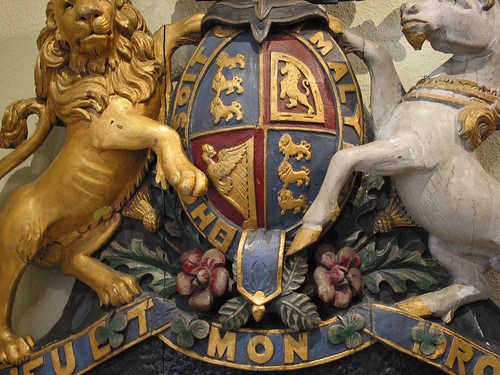
And what colours and materials soon fill the stage! The royal velvety reds and rich shimmering blue silks, the sparkling cloth of golds, the lions and unicorns rampant, the full panoply of state laid out for both a royal wedding and a coronation.
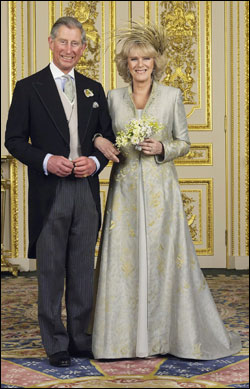
For the young Henry VI, King of England is to meet for the first time his espoused bride and straight away lead her into Westminster Abbey for their wedding and her installation as Queen.

Which is when you notice that there is a link to both the previous plays – this is yet another play about marriage. Here the marriage is the actual union of man and woman, complete with all the associated ‘Shrew’ commands of mutuality and respect; but it is also the greater marriage of subject to state, for Henry is England; further, as God’s representative on Earth, wedding Henry is a holy marriage.

Now that is cause for the trumpets to flourish – and well might the hautboys ‘en-music’ the march to the alter.

How will Henry and Margaret measure up to the standards set by Petruccio and Katherine?


Technorati Tags: , ,

Tuesday, July 29, 2008

One Step back - and then Two Steps forward:

The Arkangel on Earth!


I’m fairly new and naïve in the world of mp3 and the like – I think I’ve said it before, I actually pay for my downloads: Rewards however, are earthly – The Arkangel Complete Works of Shakespeare is buyable for download, one play at a time, and I’ve been able to indulge.

On Sunday I ‘Shrewed’’ – and a fine performance it was too.
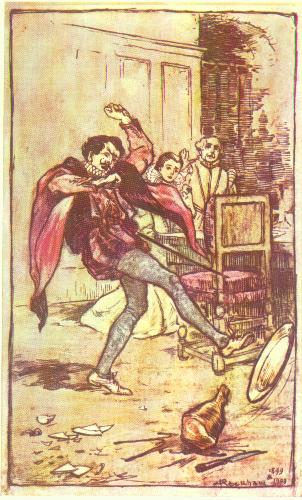
We use the word audience too lightly. Shakespeare’s, and his contemporaries’, plays were appreciated primarily through the ear. With a different play every day there was no time or need for elaborate staging and people went to hear a play anyway.

I suppose performances were more like staged readings than anything else; the sort of thing that gets done nowadays on the radio in front of a live audience.

One of the ‘insights’ gained from the touring Globe’s fast Romeo and Juliet (which visited Timisoara earlier this month) was the difference in what you pick up through the ear when things are taken at speed – and I’ll add to that now, what you pick up through the ear when it is unsupported by the visual.

Recently I’ve read a couple of editions of The Taming of the Shrew (The Oxford School edition and The Oxford Shakespeare: The Complete Works, Second Edition, edition) and I’ve seen two performances on DVD – the BBC Shakespeare and the Zeffirelli; additionally I watched the Shakespeare, The Animated Tales version.

I gained something from all of these experiences (not the least being how essential it is to see the comedies – how the characters don’t read well, how the humour is essentially human and social).

Listening to the Arkangel ‘straight’ audio version gave an extra dimension (which is odd if you think about it – take away the images and gain something). I’ll have to use the word ‘connectivity’ – a nasty word; a technician’s stringy, sticky-old-cobweb of a word; a soulless word.

Nevertheless, use it I must, for it is the only one I can think of that describes the nexus created by the physical experience of certain sound repartitions.
Listening gave you connectivity – an awareness of links across the scenes and across the plays. I must have heard and seen and read, but never noticed the word ‘pink’ in ‘The Shrew’ several times – it took the audio version to make it register – and connect it to Romeo and Juliet – and shoes: It brought with it a degree of contempt for fashion and a memory of big loud Mercutio: Which is the wrong way round – it is Petruccio who is in Mercutio.

Sly, talking of dreams, echoed all the way to Bottom’s dream – for surely Sly is a proto-Bottom. And Petruccio also sent an echo to The Dream bouncing off the walls – his ‘poorest service is repaid with thanks’ is surely Theseus on taking kindly what is kindly meant. Biondello (why does that sound like bordello?) went back to Speed – now sidelined as we are dealing with a mature marriage as opposed to playful courtship.

Part of the reason is, unsurprisingly, the Arkangel version used the full text – both the BBC and the Film cut. The criminality of wrongful cutting shone out.
But it is something else too – an Elizabethan audience was more aural – when they went to church and listened to the sermon or the Homily for the day sound patterns were set down – Shakespeare and his kin exploit these patterns. I’ve argued before about the word wealth and the strange use of it made by Petruccio – what I’d not noticed ‘til I listened was his,

tis the mind that makes the body rich

– and

honour peereth in the meanest habit.

These are keys that open the vaults to a deeper concept of the play and tie it to a much wider and wealthier world of human bond-ship and bondage. It is the wealth of the homilies and Protestantism of his time. Looking at these words on the page doesn’t make them penetrate the way hearing them spoken does – even now, as I look back at this paragraph.

Another aural shift came with Katherina – she is as violent as Petruccio (if not more so) – and by taking away the stage business, you become aware of this. What is tied up in laughter and slapstick unravels to reveal not an innocent victim of male aggression, but a female aggressor equal to any man. She is remarkably nasty – and ‘deserves all she gets’ at the hands of Petruccio. Her treatment of her sister is far worse than anything Petruccio does to her. And she assaults at least two men in the play.


I’ve downloaded the next play – The First Part of the Contention (2 Henry VI) and will be listening to it soon. I’ll watch the BBC version first, and possibly read it.

But before that I’ll be going back a step – to The Two Gentlemen of Verona. I’m going to listen to that tonight – but I don’t intend blogging on it – it’s mine, and I’m gong to just enjoy the performance.

Technorati Tags: , ,

Saturday, July 12, 2008

Global Satisfaction


I am not easily pleased in the theatre – especially with regard to Shakespeare and productions thereof. We’ve suffered (the text and I) more bad than good over the years, and few productions have left me either totally convinced or newly informed.

You will understand my hesitancy then about entering the open-to-the-elements courtyard of a local school to see a production of one of the more popular Shakespeare texts – on a night when the weather threatened and with an audience very few of whom were native speakers of English.

That night I went home more than satisfied: For the first time I’d seen a stimulating ‘Romeo and Juliet’ which I would unreservedly recommend to both novice and expert. I was both entertained (continuously) and learnt new things about the text, about Shakespeare production and the resourcefulness limited resources can impose.

The Globe Theatre, London sent out its touring team on a short European tour and landed up here in Timisoara, Romania – in the middle of what is turning out to be a hot summer: They brought the storm clouds with them (but thankfully not the rain).

As befits a company who aim to deliver Shakespeare productions for modern audiences informed by Elizabethan staging and practices, this touring company is reduced in numbers (a cast of 7: 3 females, 4 males) reduced in set (one battered van and two metal pillars) and great in energy.

Lines are taken at a ‘fiery footed’ pace – there is a serious attempt to make this a ‘two hours traffic’ of a performance, which has some pretty interesting consequences for both actors and audience. Principle amongst them is the reduction in what I can only call ‘emotiveness’ – no time in this production for dwelling on the luxury of romantic moments or the beautiful rolling of sounds.

Paradoxically, this doesn’t reduce the power of the words or the strength of feeling of the characters, or the demands placed on the actors: I’ve never before experienced the heady mixture of an awareness of character emotion, the separation of that emotion from the intelligence of the writing and an admiration for the verbal dexterity brought to the lines by the performer all at the same time. What was a shock was a realisation of this early on in the performance, Romeo’s first dialogue with Benvolio, as it happened. Many times I have been able to reflect back on a performance and separate out the fusion of these elements; this is the first time I’ve been made so aware of the elements and how well they have been fitted together, in real time. Multi-tasking!

Throughout the rest of the performance I never lost sight of this ‘keeping faith’ with the text. It is a keeping faith – surely this is the speed Shakespeare intended when writing, and the text benefits from performance at the speed.

A second consequence of the treatment of the lines in this way was the actors speaking for meaning before feeling – and a consequent clarity of text. I actually understood the ‘Friar’ talking about herbs, and believed the actor understood too! In the interval I spoke with a student whose English I’d describe as adequate-business and asked if he was following –

“Easily,” came the reply.

That is as strong a testament as I can give to the production.

By sticking to the ‘Elizabethan’, the company also had to deal with the issue of doubling.

I’ve long suspected Shakespeare’s plays need parts to be doubled to give a dimension of theatricality and an inter-textual frame of references which one person per part causes to evaporate. Here, with only seven actors, there was a need for extreme doubling and the potential for confusion.

Apart from the very end (where one actor shifts from the Friar to old Capulet and then to old Montague), there was no confusion - it was easy to follow which character the actors were playing.

Each role was clearly defined by the cast, who made apparently light work of what could have been a serious difficulty. The result was a series of significant connections usually lost in reading (and in most productions).

Romeo kills twice – both times here it was the same actor he ‘killed’ – the doubling of Paris and Tybalt begs the question of Romeo’s innocence and youth – OK, the first death is possibly excusable, but the second?

The Prince and Mercutio are the same actor – when the Prince talks of loosing family, you get an extra point when you have just seen him die on stage!

Old Montague, Old Capulet and the Friar are all the same actor – setting up a resonance which unites these characters – they are of equal dignity, could they also be equally tired of the dispute, be equally desirous of some means for settling and have been equally receptive to Romeo and Juliet uniting?

Old Capulet battles with Tybalt at the party, the Friar with Romeo later – a perennial theme of age versus youth; different youth, same age.

What was brilliant here was the actors’ and the production’s ability to suggest ‘type’ whilst differentiating individuals. A token cross and coat turned character – but the actor had to shift personality too: No doubt that the be-sandaled, trendy, socially aware, Anglican vicar was different from the ‘used to getting my own way’, businessman Capulet.

There was even room for a doubling joke – the servant Peter was played by all 5 of the cast who doubled parts. Which left Romeo and Juliet un-doubled (if I ignore the opening, ritualised, fight).

Around these two ‘pure’ characters an ensemble performed – Romeo and Juliet became the centre in a remarkable way, much as a piano might in a concerto, surrounded by orchestra.

The amount of work each and every actor had to do also neutralised the tendency to look for stars – this was real ensemble work. No person stood out –either above or below the others. Celebrity was subverted to the text, the production benefited.

The production also benefited from some serious directorial input.

There was a reassessment of several of the characters. Romeo, instead of the usual moony eyed wet, got a bit of guts (helped, I have to say, by the Mancunian accent). The scene with the Nurse and the Friar after Romeo’s banishment was turned on its head - this was an angry despair, this was a testosterone driven lament which overpowered both the Friar and the Nurse. Another first – I didn’t want to slap Romeo at this point, I actually felt he was being driven by forces outside his power to control.

There was also a remarkable attention to detail. In another Romeo scene, the one where he buys the poison, the Apothecary is usually played as something of an aside. Here, the director took the ‘need’ of the character and gave us a bit of stage business which really brought home the desperation of this character but also the import of Romeo’s lines – Romeo takes the drug and withholds the money – sheer desperation drives the Apothecary to scramble and fight and moan, frightened she’d been tricked. When Romeo finally passes over the money, his lines concerning the corruptible power of money had a significance.

The fact that the Apothecary was played by the actor who played Lady Capulet also left another hint of resonance – Lady Capulet seeks unadulterated revenge, slaughter, death, but is impotent to deliver it despite all her wealth and influence; the economically impotent Apothecary, desperate to help and sustain life, is forced to deliver the means for Romeo’s death. Theatrical (rather than dramatic) Irony at its most potent.

And theatrical was a watchword for the production..

Shakespeare uses the theatrical as a metaphor throughout all his stage works – at no point does he want you to forget these are actors playing the part, that this is a stage, not the real world, that these are ideas given flesh and, as human constructs, pale reflections of whatever truth is.

At the most serious moment, a joke can slip in – alienating the emotion. Towards the end, Peter pops up, played by yet another actor. The actors include elements of the real world into the false world of the play. Here in Timisoara, Romeo points at the real school building in whose courtyard the play is being performed, when he talks of love going to school; Capulet points to the church next to the school when he talks of Juliet going to church; Juliet’s talk of the lark in the morning is serendipitously accompanied by the evening chorus of local birds, all singing their hearts out; and, in the background, as the deaths are played out, a real bat flits above the stage catching the moths attracted by the stage lights.

There are many more things I could say of the production – the use of the van, the really great balcony scene, the humour – but I think the most important thing is I feel changed, just a little, by the production. I have been forced to reassess a play I thought I knew and to find in it a dignity which it had lost.

Thank You to the performers, the backstage crew and all who were responsible for giving me the chance to revive – it was a real ‘Shakespeareance’.

Technorati Tags: , ,

Sunday, May 25, 2008

Shakespeare's Thoughtful Thug?


Petruccio


I've done two 'Tamings' in the past week - the BBC with John Cleese in the role of Petruccio, and the 'classic' Burton-Zeffirelli film. Perhaps the most interesting character in the play is Petruccio:


The actor taking on the role, if these two productions are anything to go by, has a lot of choices to make.

And I mean choices - there is no one Petruccio: He is myriad. Both these Petruccios work, and work well. I have a preference, but it is not a judgement so much as life-style choice.

Burton plays him as 'one of the lads' - distinctly 'Tough Boyo from the Valleys'. He is using his own reputation as a hard drinking, woman loving, wife swapping film star as part of the character (and Taylor's Kate is tapping in to the same spring. This works - especially in a film which is so 'big' - almost operatic). There is (or rather, can be) a macho element to Petruccio. He can be seen as the beer lout - especially by other characters in the play, but it is a superficiality which Burton manages to go beyond.


There is an attraction for Kate - when Petruccio sees her, he 'falls' - reflecting in Zefferelli's film, the earlier moment when Lucentio sees Bianca. There is a difference: It is not a puppy dog fawning 'love at first sight'; it is a hit by love's dart, I've met my match.

And he has too - this Kate never really submits, she retreats: Petruccio knows it, and doubts his own strength. There is a vulnerability here - his final command is more wish than assertion.

The fight goes on - he will continue drinking, she will continue fighting.

All this reflects the 60s and liberation element - but it is found in the script (although, as with all film adaptations which have any chance of working in the cinema, there is heavy cutting and shifting of things about). What will hold this couple together (if anything does) is the physicality and 'good sex'. The animal magnetism is paramount. The fight is part of the love - this is consenting bondage.

Which contrasts somewhat with John Cleese as Petruccio.

We have here the 'thinking man's' Petruccio.

Very early on in the performance you are made aware that this is an intelligent man: He is very self aware - he knows his wildness is a weakness. He is logical - he works out how to win Katherine. He is human, and knows others are human too.

Like Burton, Cleese is attracted to his Katherine - but it is not the love dart, it is a realisation, and an admiration. The wildness he sees in her is damaging - it needs to be controlled - but he sees the same extreme in himself, and thinks this is the woman who will force him to become more temperate too. This is a woman worth giving up his 'freedom' for.

Love for this Petruccio is to be found in harmony, not discord.

If Burton is wildman, Cleese is 'Madman'. It is Hamlet mad, and 'Tom O'Bedlam mad: It is a Fool madness that has a cleansing and understanding behind it.

When Cleese says 'Cruel to be Kind' - he means it, and has the academic references to prove it.

The BBC script allowed all of the lines, so there is a natural depth to Cleese's performance which Burton had no chance to develop. It was also a production that played whole scenes in one take - again, allowing for a dynamic which the cut,cut,cut of film finds it hard to sustain.

There is an assurance at the end of this 'Taming' which lets you know they will remain together - this is a marriage which will produce children - and what children!

Technorati Tags: , , , ,


Tuesday, May 20, 2008

Shakespeare Intelligence

No, I'm not about to launch a review of Shakespeare the Thinker (the very title, for some reason, sends shivers of distaste through my body), but muse about something that has been brewing for a week or so now -


Shakespeare


and

Multiple Intelligence


Multiple Intelligences has proved illuminating: It is an attempt to define "Intelligence" in a way that recognises the multitudinous and complex nature of the connections the human brain can make, and has provided a basis for explaining why some forms of education are just plain 'dumb-making'. What I really like about it is the fact that it is inclusive - it attempts to explain why there are differences in the way people think and why those differences result in a rich variety of human strengths.

Unfortunately, most Shakespearean scholars (of the old school) don't seem to have been raised in a Multiple Intelligence environment and certainly have never got to appreciate the differences between themselves and other, equally, but differently, 'intelligenced' people. Older, and less enlightened, educational systems - the ones which the 'Shakespeare Wallahs' were successful in - tend to emphasis language and numerical skills - they tend to call them 'standards'. What Multiple Intelligence theory suggests is that this is a very limiting (and ultimately counter-productive) educational endeavour.

Shakespeare's plays, and the massive dislike engendered in school for them, are a case in point. In the theatre, they are popular; in the 'linguistic' oriented, text based school, they are not. If you don't like School Shakespeare, it is your fault - generations have loved the plays - so there is something wrong with your Intelligence.

(I should at this point point out, Dr. Howard Gardner himself sometimes prefers the word talents rather than intelligence - which he sees as too limiting: I'm just being provocative sticking to the 'I' word.)

My main question could be framed, How does Shakespeare manage to survive in the hostile world of ivory towered scholarship and text based examination?

Well, the answer is glaring obvious - Shakespeare wrote plays. They survive in the theatre, on the screen (large and small) in the imaginings of a Multiple Intelligenced world.


What the plays in performance do is stimulate a whole range of 'intelligence' - in fact, there isn't one which a good production of a Shakespeare play touches on.

Shakespeare has 'coded' into his text a lot of the clues as to what to do - but the spaces are there for the actors, directors, and everyone else, to fill in the gaps - be it music or dance, movement across the stage, or a glance between characters.

There is nothing particularly revolutionary in what I have just said - but, rarely in the 'Literature' classroom is anything other than a nod given to these overwhelmingly powerful factors of the play.

Of course - there have always been teachers who have attempted to bring the plays to life and have treated the texts as a starting point (I was fortunate enough to have been taught by a couple of such teachers) - but the educational systems soon force the written exam and the 'language' focus on to the majority of students.

The Shakespeare 'experts' ,consequently, are selected from the people who perform well in 'Linguistic-Literary' intelligence area. These people define what is good and valuable, make decisions as to text and argue interminably over minute language details which are inconsequential in the extreme.

But the plays actually appeal and stimulate and entertain a much wider range of - Intelligenced - people.

One of the striking things about the Shakes(blogo)sphere is how wide a range of people contribute to it (and why are so many connected to the Logical-Mathematical realm of computers?).

There is another insight to be gained from thinking Multiple Intelligently - individual play popularity.

I happen to think that the best of Shakespeare's plays is 'A Midsummer Nights Dream'. I think Hamlet is a damp squib with a serious need for throwing away and forgetting about until it gets a make-over. I happen to like 'The Two Gentlemen of Verona' - thinking it a better play than nearly every scholar who has commented has given it credit for.

Either I am a nut (and I don't come from Brazil) or something is going on here.

One thing worth noting is my Multiple Intelligence profile (as generated by the little quiz linked to at the start of this blog) - my strongest intelligence is Naturalist - no surprise the very 'green' 'The Dream' appeals. But also I notice the images to do with nature - the storms (I Like Lear) and talk of flowers; the cliffs of England, and worms.

The rest of my profile is fairly even - but the weakest area is interpersonal (I'm a Problem Play remember). Now, why don't I like Hamlet? Could it have something to do with all that uninteresting blah blah about relationships? Or maybe it is just that the interminable linguistic arguments and unsatisfactory performances generated from the incomplete final text?

It used to be put down to taste - with the suggestion that an 'educated' palate was more sophisticated and worthy than an uneducated one.

You can't do that in a Multi-Intelligent world - my tastes reflect my Intelligence - I AM right, 'A Midsummer Nights Dream' IS better than 'Hamlet' - you are just Naturalist-Intelligence deprived if you can't see it.


Technorati Tags: , , , ,

Wednesday, May 14, 2008

Two (not 3, or 1) Gentlemen ...


Some insights flash upon one as in the Road to Damascus - others have a slow dawning... this is an example of the latter: Silly really, considering I posted on the importance of titles a couple of months ago.

Twoiness (or two-i-ness, or two-y-ness?) is quite noticeable in

The Two Gentleman of Verona.

Let me make it plain from the start - not just obvious (i.e. you see it) but noticeable ... in performance.

some things you get when you read over the text - very

un-Shakespeare-idea-ian

(and for a development of that I refer you to Brook, not me).

When watching the BBC production - Spaniels hit me twice ... and Chameleons. I thought it odd at the time, was Shakey being a bit 'shakey'? Was he repeating himself like a school child who gets an idea and can't let go? Then I realised, a couple of days later - I noticed those words and ended up posting on them ... erm, interesting.

Then another dawning - I mentioned Speed's 'swinging' when I reviewed the production - and he actually gets two of them in the play.

Walking to work through the park another development of the two-y-ness (settle for that I think - pun on the 'y') : Two men, two women to go with the men, two servants, two suitors, too many twos to be accidental?

And that led on to thinking about the idea of pairs and two-ness (don't want it to sound like chewiness this time).

What first popped out of the cogitation was, of course, the 'famous' pair play - The Comedy of Errors. And what struck me was the difference.

There the pairs are twins - here they are not. You get the pair of a master and a servant, a man and a woman, a man and a dog ... united in a difference.

In fact it is the differences that make the two 'individuals'. So what unites them as a pair?

Love and duty.

'To love, honour and obey'

Is this a play about the break needed for marriage - a play about sorting out the difference between the play friend and the partner for life?

If so, there is a very strong religious vein running through the play which, although treated lightly by the text, is implicit - and obvious to an Elizabethan audience in a way it isn't to us.

Take the two servants - Speed is a boy - an intelligent, lively, beer drinking boy who gets treated like a boy. He is the model of youth who stays just that throughout the play.

Lance is on a threshold - he is contemplating marriage - and a move out of one type of service into another? His 'lament' over leaving the family, and the excessive emotions, reflect not just the parting of a servant to go with his master - they suggest a ritualised weeping: Was this typical of Elizabethan marriages? I have seen weddings where the leaving of the girl from the mother's home is in fact linked to such wailing.

I am not suggesting this as fact - it is speculation ... and that is what thinking about the play after viewing does - makes one think and speculate.

Which brings me to the final scene - and A Midsummer Nights Dream has the quotes that help ...

"Begin these wood birds but to couple now?"

The first word is begin ... Two Gentlemen shows the ending of one phase, and the beginning of the next - but there is a touch of reality here ( in what can be seen as a very unreal play):

"The course of true love never did run smooth."

None of the participants in this scene is going to 'happy-ever-after-dom' ... it is marriage they head for.


Technorati Tags: , ,

Sunday, May 11, 2008

Puddings


and proof thereof.

It never ceases to amaze me how some people judge plays.

I mentioned that I enjoyed 'The Two Gentlemen of Verona' more than I've enjoyed 'Hamlet' for a long time - and someone suggested my wits were crumbling.

Then I remembered me - of course, his is a judgement based on the book, not the performance.

How many people actually sit through a performance of Hamlet and come out of it able to say, 'I enjoyed that'?

As an imaginary percentage, if one were to compare the 'enjoyment' in a a performance of 'A Midsummer Nights Dream' to 'Hamlet', which would win?

Puddings are judged in the mouth, not the recipe book - plays should be judged in the theatre, not the script.

Technorati Tags: , ,


Tuesday, April 29, 2008

Original Pronunciation

Link for those interested:

Public Broadcast on Original Pronunciation at the Globe.

A lot of people seem unaware of the richness of resources available for reconstructing the sound - not the least being the glory of English Spelin - writ as proNounsed until some idiyuot invverntd dickshiooneries.

Too Bay, awe not to Bay!

Another link worth looking at is THIS: Jolly good fun for starters.

Finally - still to come over on the Music Review section of my blogomania is the piece on Elizabethan music being prepared as a response to all the cd and mp3 material I've been working through as a result of the 'Complete Works' project.


Technorati Tags: , ,


Friday, October 12, 2007

In black and white: A question of Othello?


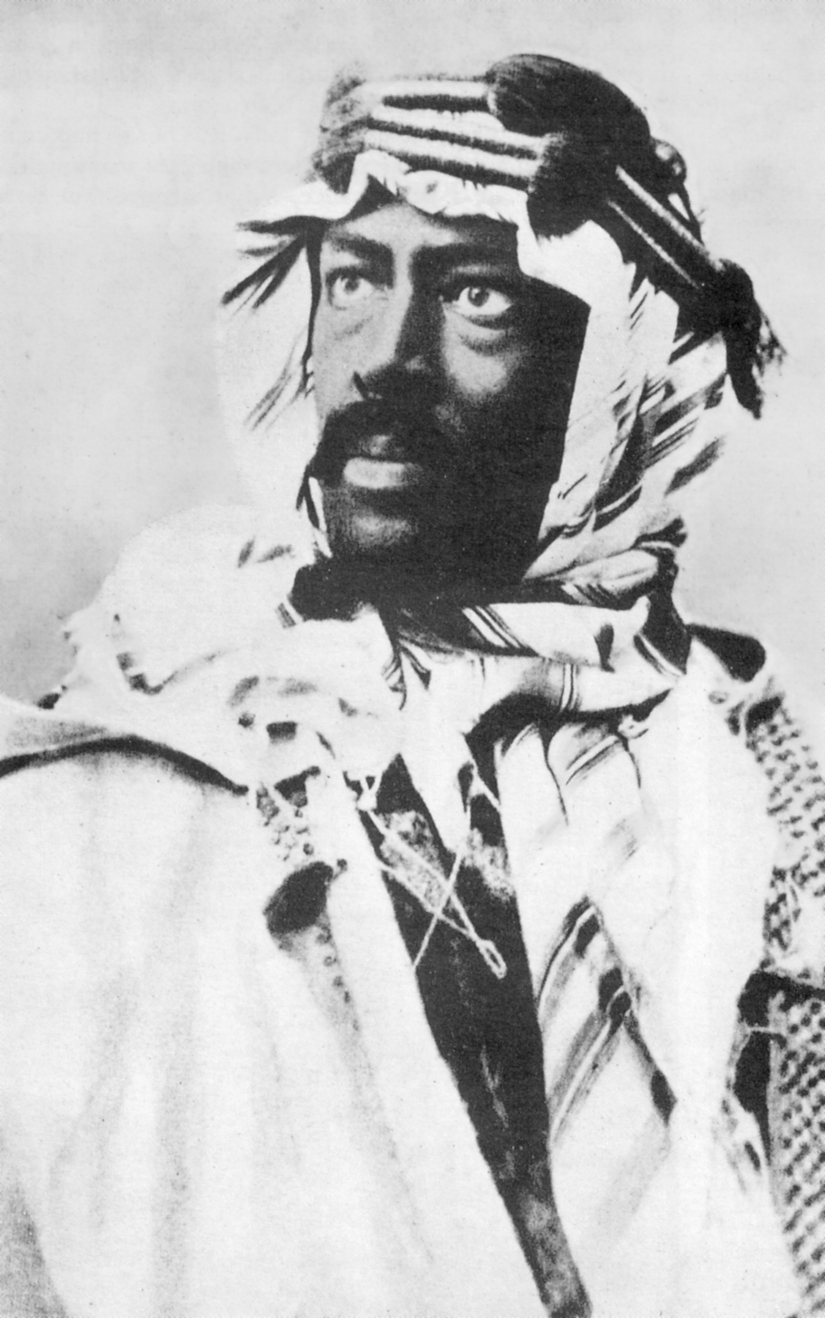
I’ve been looking at Othello – or rather, I’ve been looking at the skin of Othello. Over the last couple of weeks I’ve watched several versions of the play on DVD and, as a result of a point raised by in a comment (by Ian Thal), I have been not so concerned about the issues raised by the play’s text as about whether a white actor can still ‘black up’ and play the lead.

The answer is obvious – of course they ‘can’ - but then a more troubling word SHOULD replaces the can.

The more I thought about the question, the greater the tangle of ideas became, spreading out wider and wider through many aspects of both theatre and modern life. Three key questions did emerge however:

1. What effect does the social environment an audience lives in have?
2. Is this a question of Politics or Theatre?
3. Is this about typecasting?

I’ll try to tackle each of these issues in turn over my next three posts.

1. What effect does the social environment an audience lives in have?

There is no doubt in my mind that the social context is important to all performances of all plays – that performing Othello, for example in Northern Cyprus will have a considerably different impact from performing it in Moscow; a performance in a Burnley High School for a bunch of very mixed-race-and-religion teenagers, will not carry the same meaning as exactly the same production performed in a pub in Buxton.

All four of the locations chosen above are known to me – I’ve lived and/or worked in each of them. A white actor blacked up would have a varying significance to each member of the audience in each of those locations – but a more generalised reaction is likely to occur.

I suspect few in Moscow would even be aware of an issue existing – it would be considered ‘OK’. There is a frequently-aired-on-TV classic film about Pushkin where the main role is played by a famous Russian stage actor, blacked-up. I find it strange that, in a deeply racist modern Russia, the National Poet is not only thought to have been dark skinned, but to have had slave ancestry: A white actor playing him is ‘normal’ – and his mixed race origin almost a source of pride. Shakespeare’s plays are considered classics and what matters is the quality of the actor – and the idea of quality acting in Russia is something I will return to in a latter post.

Northern Cyprus is somewhat different: Essentially a Muslim country, the location of the setting of the second half of Othello and very ‘British’ in many respects. Again, I have a sneaking suspicion that there would be little impact in the white actor Othello – as long as he ‘Blacked-up’ and didn’t go for the last-year’s-trend of lighter skinned muslim-ish Othello (after the Ottoman envoy picture). I can even imagine Turkish actors happily blacking up to play the part themselves (the ‘uncircumcised dog’ line would have to be cut though)!

What both of these societies have, which they would bring to the performance, is a different focus from modern American and British society with regards to social issues and colour. The word black does not carry the same resonance – in Russia a ‘black’ is anyone who is not essentially fair-skinned: Georgians are blacks to the Muscovite, as are Chechens, and people from Dagestan.

On Cyprus, Greekness and Turkishness are far more relevant than skin colour – Religion, language and culture are so much ‘at issue’ that Othello’s skin could be viewed almost as a tone rather than a colour: In Gazimagusa (former Venetian stronghold on the island) he would be a representative of a defeated European Christian colonial power, and his otherness just an aspect of a greater weakness and disunity which soon resulted in the Ottoman takeover.

The two locations in England bring up a whole set of different attitudes and there is a greater blur between the political and social concerns people will bring to a performance.

Colour and religion are connected in the UK – and the issue of Othello’s ethnicity carries a greater weight, with a different distribution, than in many other societies (including, I suspect, ‘Christian’ USA). Othello has to be ‘surface other’ – he can be other ‘olive’ he can be other ’black’ – but other is essential. But Othello must also be ‘us’ – homo – in both the sense of humankind and oneness: He is ‘yin and yang’ – he is innocence and experience: Angel and devil.

He is homo-genius and homo-simpleton!

In the contemporary mixed race, mixed religion, mixed-gender school, Othello becomes an internet of issues and concerns – a white male actor assuming skin colour is not a ‘nigger minstrel’ – and is; he is both a unity of Britishness and a relic of Elizabethan Englishness and ‘Blackamoor’ attitude.

A ‘black’ male actor – let us say with Caribbean antecedents – looses some of that friction but replaces it with others – race and mixed marriage is strangely brought more to the fore – a white actor, albeit with a black face, is still a white actor – a real black actor is black! In cosmopolitan London this might not signify – in working-class, mixed race Burnley, with its strong far-right nationalisms, it does.

And modern DNA analysis is digging up all sorts of skeletons – African genes brought into Britain with the Romans – and happily bouncing around in the gene pool of the whole of the British Isles ever since. Not to mention the realisation that a sizeable proportion of the 50’s immigrants from Jamaica and the other colonies were carrying not only the slave bloodline but that of the white slave masters mixed forcibly together.

Popular television programmes and national educational requirements mean that some of the audience in this school would know these things – and, hopefully, apply them to the questions raised by the play and its casting.

But what if the actor is neither ‘white’ male nor ‘black’ male – but Pakistani male? Or Jewish? Or Chinese? Each and every one represented in that school audience.

Surely all have a right to an Othello?

A couple of hours car drive away and you could be sitting the pub in front of the Opera House in Buxton during the summer festival – watching a performance of Shakespeare’s Othello (the Opera House would have Verdi’s take – where the question of painted singers doesn’t even raise a butterfly’s wind beat of doubt). Here you are much more likely to have a middleclass, ‘educated’ audience – used to theatre conventions and aware of the ‘classic’ issues – with a degree of respect for the traditions and an eagerness for novelty.

Would race feature in their thoughts more than gender? Is this a question of prejudice or of class? Good and evil in battle for the soul or greed and materialism as a source of the contemporary decline in culture and standards?

Yes, there would be a nod in the direction of should they/shouldn’t they black-up – but after all, this is the theatre – suspension of disbelief and all that – not to mention our own sophistication and the real issues of the play.

I know I am oversimplifying all four potential audiences - but there is a degree of truth (at least as I have witnessed) in all four representations.

As for answering the question, “Should a white actor black up to play Othello?” Well, I think I’ve got as far as yes – and no.

More intriguing a question is, “Could a black actor play Iago?”

(To be continued.)

Thursday, September 06, 2007

Me at work!

Results of Shakey and You!

Click on the above or see me here too:

All the World's a Stage:


To Be:


Romeo and Juliet:


Friday, August 31, 2007

Right Royal for Free!

You just drop into a site and find things.

The RSC has video to watch - interviews, extracts, bits and bobs.

Why didn't I know that?

http://www.rsc.org.uk/explore/

Tuesday, August 21, 2007

Ambience and Accident


I'm just coming out of a week of workshop and performance with a mixed group of enthusiastic amateurs and (what I like to refer to as) proto-professionals.

What started off as a performance of a cut down Shakespeare, ended as a most interesting experiment in the application of 'ambience' and 'accident' to a variety of text extracts. The basis remained Shakespeare - as reflected in the 'All the World's a Stage' speech which both started and ended the performance.

On Friday evening, as the sun set, we promenaded the texts in front of an invited audience - in the local botanical garden, a public place which hadn't been closed to 'the public'. Most definitely intended as (as one participant phrased it) a work in progress, resonance and echo, bright bombs of ideas and dud squibs have been infecting my waking thoughts since.

The strongest image I come up with is that of Seurat's, 'La Grande Jatte'.

In that remarkable work, individuals, pairs and small groups are placed in a man adapted landscape: So too with our texts.

Monologue, dialogue and more extended extracts from scenes were placed in a landscape which evolved out of the mixture of human decision and selection, and the more powerful vagaries of natural growth working on a genetic ‘text’.

This is a rational/real-isation ‘After the fact’, but so much of what happens in theatre is precisely thus - no excuse needed.

Environment and text interacted far more powerfully than I anticipated (or hoped for). Indeed, I am not sure I was consciously aware of the potential when I started on the workshops.

What the gardens were originally chosen for – backdrop and oddness, colour and outdoorness, time and light - soon transformed the scenes.

The strongest effect, in performance, was to unify. Under the green wood, along the paths, confined in the fenced space; but much stronger in feeling was the awareness of people – the park was full of humans – like La Grande Jatte on a Sunday morning.

These people were sitting, talking, walking, playing guitar, watching the children – and the ‘actors’ were no different – they too were in the playground, a natural part of the park: Truly, all the world had become the stage.

Each text was given a relevance – and the extracts became caught moments of other people’s conversations.

Caesar was just walking along the footpath amongst a group of friends and between the park people when from another path, across the formality of a flowered bed, the soothsayer shouted her warning – a moment only, then passed on – not time to catch more than an awareness of other people’s lives.

Later, on a zigzag Chinese bridge, over a dry pond, Oberon has just parted from Titania – and calls for Puck to fetch the magic flower – a dog barks as he mentions the singing of the mermaid, children are noisily playing, a family, pushing a child in a buggy stop and watch, then move on – a man with his children had watched the actors ‘rehearsing’ a previous scene – time looped.

Saturday, June 02, 2007

Makbeth


Not everything you think, is true.

Does Makbeth meet fairies or witches?

In a previous post I explored Shakspear and the connection with King James and his little work on Witchcraft.

Now I have the picture of Makbeth's first meeting with the 'witches'. It is from the ‘source’ Shakey would have used for the main elements of the plot – Holinshed’s Chronicles (need to check that – that is what it said on the Internet site I borrowed the picture from).

Now, I don't know about you, but the rather refined looking ladies greeting the Elizabethan 'gents' in the picture above don't quite fit my 'vision' of Macbeth and Banquo's 'black and midnight hags'.

What worries me is that the woodcut might be much closer to Shakspear’s image, and possibly the original production’s costuming, than I would like.

Part of the problem is that I am not sure how to read the picture – there is an iconography here which I am not a party to.

The gent closest to us – Makbeth I’d guess by the way the witches are looking to him – has no armour on – or rather has one symbolic piece, the helmet (possibly a breastplate – but it looks more doublet to me). If he is the victorious body splitting general of Shakspear, he’s had a jolly good wash and got the grooms to work on his horse too. Is the helmet enough to tell the Elizabethan reader this is a military hero? If it is, would it be enough for the Globe’s groundlings?

I notice behind his head is a castle – with some active birds – must be Macbeth’s castle – although they don’t look like Martins to me, more like crows: Does suggest Shakspear looked closely at the picture though.

More crows flying around the ‘castle’ on the top of the head of one of the ‘witches’ too – although these could be clouds. Is that Elizabethan headgear? Maybe not – old fashioned hat? And this one is pretty ugly – broken nose by the looks of it.

Wouldn’t say the others were ugly though – and they don’t look particularly old either – quite smart, upright, well shaped.

I am reminded of Alice Nutter.

For those of you not familiar with the local history of the Pendle area of Lancashire, Alice was hanged for being a witch in the early 17th century: She was something of a lady – comparatively wealthy in fact, and not at all the ‘typical’ Halloween figure. She also just happened to be a catholic, which might have had something to do with the hanging. There were a number of other people (male and female) hanged at the same time – none of them quite of the same social standing.

The clothing on the witches is interesting – looks exotic – the woodcut cutter has taken pains over the patterns on the material – each different, each looking expensive, possibly silk or damask? This would make them stand out to the Elizabethans.

So, ‘from the farthest steep of India’? Spirits of some sort – hence the fairies.

Shakspear gives them beards – there is the slightest suggestion of such in the picture, from the attempt to create shadows. He has us meet them in weather very unlike that of the woodcut – which is quite pleasant. Certainly he takes us further – but how far would he have gone in production?

Nowhere near the broomstick riding cacklers of popular imagination I’d guess.

Tuesday, May 29, 2007

Hamlet

The Play's the Thing!

(A nu-Author-ised Version)

The crowd’s quickly filing in through the doors and filling the courtyard of the Globe. A few dark clouds have loomed over since Hercules ran up the flagpole but the wiser, or at least more experienced, Groundlings know they're empty of threat.

A couple of young gents have tried muscling their way on to the stage - it's a new play and a great opportunity for the 'Gulls' to show off their feathers - but they must be new in town: The Globe doesn't allow that sort of thing. They're skulking off to one of the higher levels, faces reddening at the jeers of the apprentice boys.

The usual ladies are plying their trade - they'll need to be quick, the building is almost full and there’re signs of movement in the musicians’ box.

The noise inside is quite deafening, shouts of friends across the floor, apprentices greeting masters and their wives in the galleries running around, a few of the finer folk even higher. It's the new play by Shakspear, one of the actors - something about Hamlet. Several of the audience remember an old play, some even saw it across the river, but it didn't stick in their memories.

Most are expecting plenty of blood - the latest fashion, a good bit of revenge and a few jokes: All know they'll be plenty to talk about after - one of the delights of the new Globe is the arguments in the bars of the stews that take place regularly after one of Shakshaft's concoctions. Several of the crowd are just content to gaze around, mouths open, like dead codfish, stunned by the splendours of the new theatre.

The trumpets blast out and the apprentices cheer. A mix of hissing and hushing is followed by a drum role; the back curtain is thrown open, a couple of ordinance fire and a great loud march sets in.

Straight away the audience understands we’re in a court – some proud king is about to make his entrance, and four stage hands are carrying in the state – so, its official business, big declarations and lots of boasting expected.

In they come. A couple of lackeys in royal livery representing the hundreds of servants who could never fit on the stage, a priest or two, several courtiers – one of whom is an old man, (surely that’s the actor who was playing Caesar last Tuesday?) - there’s Shakspear at the back pretending to be a soldier – and in progresses the King with one of the older boys by his side as the Queen (Time they let him grow a beard and get out of that costume – it fitted him well when he did Titania a couple of year’s ago).

Where’s Burbadge?

Up in the balcony – dressed in black – several of the crowd took him for one of the Gulls who’d managed to sneak in – posing in black – quite a popular colour these days – but the regulation hat’s missing.

Is he a lover, or a puritan? Why’s he up there and not down on stage with the court? Amazing workmanship on that black doublet – rich whoever he is.

Cheers on the stage, echoed by the more roisterous in the crowd, as the King sits in his throne and the Queen takes a chair by his side.

One of the Groundlings bellows, just as he’s about to speak, “Watch out, there’s a black crow above your head!”

This gets a good laugh and gives Burbadge the chance to nod his acknowledgements to the adoring Globe. Great applause and stamping of feet, from some; hisses and shushes from others only stopped by a repeated trumpet clarion – the King rises and attention once again is drawn to the court.

Very few notice the thought behind the eyes of the soldier at the back – but there’ll be changes to the opening of the next performance, if the rest of the play goes well.

Thursday, November 23, 2006

Enter the King

(Macbeth: Act 1, Scene 2)


What would Shakespeare's audience have experienced at the very start of this scene?

Firstly, there would have been music - the entrance of a King is marked by trumpets.

These trumpets, though, are more battle alarms than ceremonial entrance music. The Elizabethan audience would know the difference.

And instead of the usual stately King’s entrance (see Olivier’s Film, Henry V) we have a rushed entrance – but, it is still ordered, it is still according to rank and the costumes make fairly clear who is more important, who less; who is noble, who a servant: Who on active service, who civilian civil servant.

If this were the start of the play, it would be confusing – to make sense of it, you need to know what is causing the rush.

But it isn't the start of the play - it follows the first, witches scene - which sets up an anticipation in the audience.

The witches dress 'out of rank', they indicate an evil force at work in this state, they show the battle and mention, - Macbeth.

The sound effects in their scene is ‘thunder and lightening’ – rumbles and crashes – the trumpet music, in comparison, is much more ordered.

Much of the second scene only makes sense (and unity) in the light of the first scene.

When the 'sergeant' enters - what does he look like? How does he 'fit in' to the rushed, but essential order and harmony of the court? - He doesn't. He is a bloody man - a phrase often laughed at as weak, but at the time of writing, pregnant with meaning.

Modern televised war, pictures edited to reduce exposure to too much horror (for political and taste considerations) doesn't begin to represent the reality of hacking away at human beings with sharp edged weapons. Try slitting a man's throat and not getting blood on your shoes.

Bullets kill much more cleanly than swords.

I remember the Peter O'Toole Macbeth - derided because it attempted to bring back the blood - but truer to the original in this respect than any other modern production (including film).

The blood screams out - the State is in danger - we can't tell what this man is - he is a soldier of some sort, an officer? Rank has become confused. To the Elizabethan mind, few things were more dangerous than rank confusion (sorry, couldn't resist the pun).

‘What,’ thinks your average 'Lizy apprentice, ‘were those words of the witches? Fair is foul, etc.' - what is rotten in this State? What is upside down?’

‘And what of Macbeth - "they" mentioned him?’

Without the first scene, the subtext is missing - and a considerable amount of the depth of meaning we get out of these scenes comes not from the words, but from the "production" – especially costume.

Shakespeare's words are only part of the work he did - he acted, and directed as well.